
A child who is injured today will be a different size, shape and person by the time the claim is ready to settle. That single fact separates paediatric plastic surgery from adult work more than any difference in technique. A scar that looks well placed on a seven year old can sit in the wrong position on the same person at seventeen, and a graft that covered a defect neatly in infancy may not have grown with the tissue around it. Assessing a paediatric case means predicting what growth will do to a repair that has not finished being tested.
In short: paediatric plastic surgery claims turn on growth, consent and timing. Growth changes the outcome for years after the last operation, consent runs through a parent or a competent child rather than the patient alone, and a claim usually cannot be valued properly until the child is close to skeletal maturity. A report written too early will either overstate a good result or understate a bad one.
Prof. Sandip Hindocha is a Consultant Plastic Surgeon and the UK’s National Lead Forensic Medical Examiner, and a member of the Faculty of Forensic and Legal Medicine. He prepares plastic surgery expert witness reports for claimant and defendant solicitors and as a single joint expert. His duty is to the court, not to the party who instructs him.
What Paediatric Plastic Surgery Covers
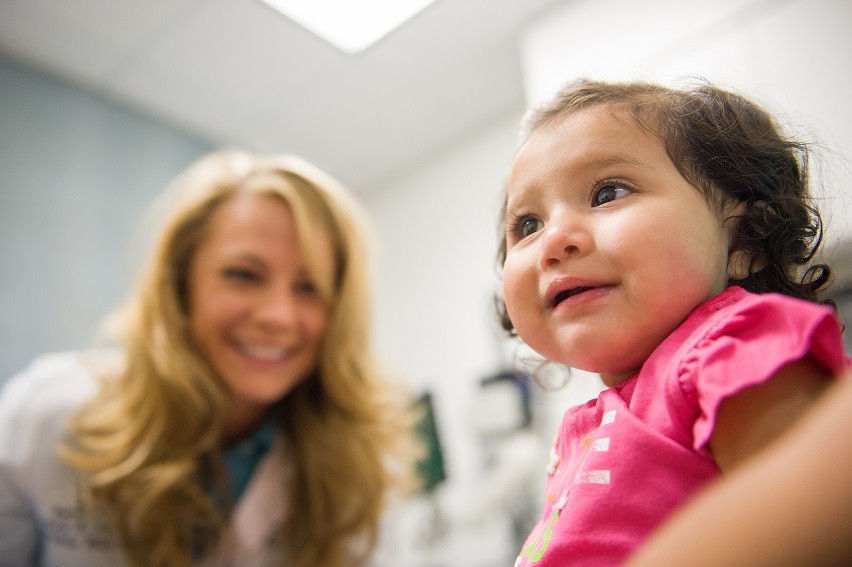
The specialty is broader than most instructing solicitors expect. It includes congenital work such as cleft lip and palate, ear and hand anomalies and vascular malformations. It includes trauma, which in young children is dominated by burns, scalds, dog bites and falls. It includes reconstruction after tumour removal, and it includes the revision work that follows any of these years later. A single child may pass through several of these categories before adulthood.
Congenital and acquired cases behave differently in litigation. A congenital condition is not itself anybody’s fault, so the question is whether its management fell below a reasonable standard. An acquired injury brings both liability for the original event and a separate question about whether the surgical response made things better or worse.
Why Children Are Not Small Adults in Medicolegal Terms
Three things change when the patient is a child. The tissue is still growing, so the result is not fixed. The decision maker is not the patient, so the consent analysis moves outside the consulting room. And the loss runs for a longer period, because a disfigurement acquired at six is carried through school, adolescence and working life rather than picked up in middle age.
Growth and Why It Changes the Whole Assessment
Grafted and scarred tissue does not grow at the same rate as the skin around it. A skin graft placed on a growing limb or across the chest can become relatively tight as the surrounding area enlarges, and a scar crossing a joint or a growth centre can tether and limit movement that was full at the time of discharge. This is why a child who was assessed as having an excellent early result can present years later needing further surgery that nobody was negligent about.
The facial skeleton keeps developing into late adolescence. Definitive reconstruction of the jaw, nose or orbit is often deferred until growth has largely finished, which means a child injured at ten may still have planned operations ahead of them at eighteen. An expert report that treats the surgical pathway as complete when it is not will get the prognosis, the future care schedule and the value of the claim wrong together.
Scarring in Children and How It Behaves Over Time
Children scar actively. Hypertrophic scarring and keloid formation are more common in younger patients than in the elderly, and a scar that is red, raised and itchy at six months may settle considerably by two years without any further surgery. That maturation period is the reason a paediatric scarring assessment carried out shortly after the injury tends to overstate the permanent damage.
The reverse error is just as common. A scar recorded as flat and pale in a young child can be pulled and widened by later growth, particularly across the chest, the axilla and the flexor surfaces. The general approach to valuing this sits in the same framework as adult work, which is covered in more detail on the scarring and burns expert witness page, but the timing of the examination matters far more in a child.
Burns and Contractures Across Growing Joints
Burn contracture is where growth and scarring interact most visibly. A burn crossing the neck, axilla, elbow, wrist or knee can produce a band of tissue that lengthens more slowly than the limb it sits on. The functional loss then increases with growth rather than settling, and release procedures are commonly staged and repeated as the child grows rather than performed once.
For a claim, this has two consequences. Future surgery is not speculative, it is expected, so the report needs to set out how many further procedures are reasonably anticipated and roughly when. And the disability is not static, so a snapshot range of movement taken on one afternoon says less than the trajectory recorded across the hospital notes.
Consent When the Patient Is a Child
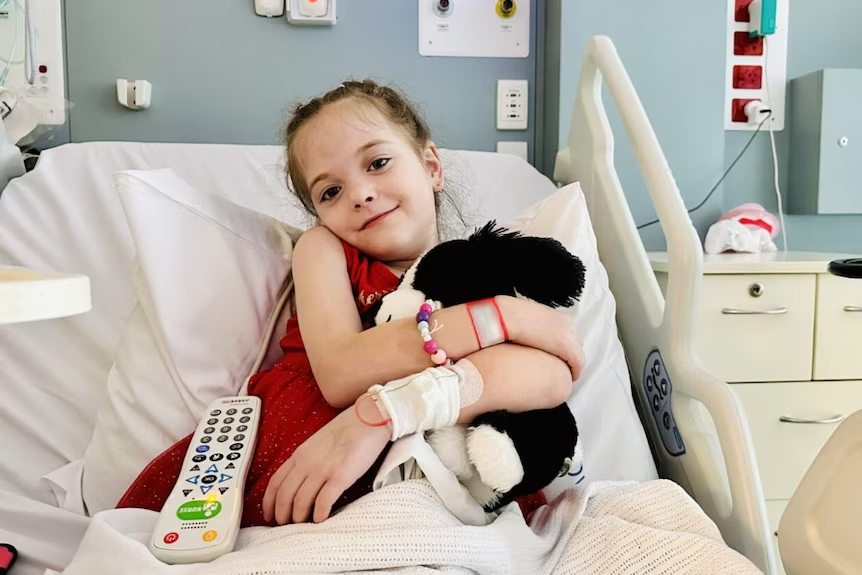
Consent is where a large share of paediatric plastic surgery negligence allegations begin. Someone with parental responsibility usually consents for a younger child. A child under sixteen who has enough understanding and maturity to grasp what is proposed can consent for themselves, the principle established in Gillick v West Norfolk and Wisbech Area Health Authority. Sixteen and seventeen year olds can consent to their own treatment under section 8 of the Family Law Reform Act 1969. The General Medical Council sets out what is expected of clinicians across all of these situations in its 0 to 18 years guidance.
The medicolegal question is rarely whether a signature exists. It is whether the alternatives, the material risks and the option of doing nothing were explained to the person entitled to decide, in terms they could act on, and whether the child’s own view was sought where they were old enough to have one. The same analysis that applies to adult cosmetic work, discussed in informed consent failures in plastic surgery claims, applies here with an extra party in the room.
Common Grounds of Complaint in Paediatric Cases
The allegations that recur are delay in recognising a burn depth or a compartment problem, failure to refer a hand or nerve injury to a specialist service, poor scar placement in a growing area, inadequate follow up so that a developing contracture was not picked up, and consent taken from a parent who was not told that a second operation was likely. Nerve injuries in particular are assessed differently in children.
Establishing breach of duty follows the ordinary route for clinical negligence. Causation is often the harder half, because the question is not only what was done badly but how much of the current appearance or function would have been different had it been done well.
Timing and Why a Paediatric Claim Often Cannot Settle Early
Because growth keeps changing the result, a final prognosis frequently cannot be given until the child is approaching skeletal maturity. Parties sometimes deal with this through an interim payment covering the treatment already needed, with the final assessment deferred. An expert asked for a settled prognosis before the growth phase is over should say plainly that one cannot yet be given, and should say what would need to have happened before it could.
That is an unwelcome answer for a case everyone wants closed, and it is still the correct one. Saying so is part of the duty to the court set out in CPR Part 35.
Litigation Friends and Court Approval
A child cannot conduct a claim alone. Proceedings are brought through a litigation friend, usually a parent, and any settlement has to be approved by the court under Part 21 of the Civil Procedure Rules. The court is checking that the sum is reasonable for the child, not simply that the parties agree, and Practice Direction 21 sets out what has to be put before the judge.
This raises the standard the medical evidence has to meet. An approval hearing is where a thin or premature report is most likely to be sent back, because the judge is being asked to close a claim on behalf of somebody who cannot object later.
Limitation in Paediatric Claims
Under section 28 of the Limitation Act 1980, time does not begin to run against a child while they are under eighteen. The three year period starts on the eighteenth birthday, so proceedings can generally be issued up to the twenty first. That gives a longer window than an adult claim, and it also means the medical records being examined may be well over a decade old by the time an expert sees them.
Old paediatric records are frequently incomplete. Growth charts, burn depth diagrams, photographs and physiotherapy notes go missing more often than operation notes, and their absence changes what an expert can properly say about the original state of the injury.
What the Expert Report Needs to Cover

A useful paediatric report separates what is already fixed from what growth will still change, and says which is which. It records the current scar or defect against a recognised scale, sets out the surgery already performed, states what further procedures are reasonably expected and at roughly what stage, and identifies the point at which a final prognosis will become possible.
It should also address the child directly rather than only the parents. Function, schooling, sport and the social effect of a visible difference in adolescence are part of the loss, and they are best captured by asking rather than assumed from the appearance of the scar.
Frequently Asked Questions
Can a paediatric claim be settled before the child stops growing? It can, but only where the residual injury is unlikely to be altered by growth. Where a scar crosses a joint or a growth area, or where further reconstruction is planned, settling early risks undervaluing surgery that has not happened yet.
Who gives instructions in a claim brought for a child? A litigation friend, normally a parent or guardian, conducts the claim on the child’s behalf, and the solicitor takes instructions from them. The child’s own account is still relevant evidence and an examining expert should record it.
Does a parent have to be present at the medical examination? For a younger child, yes. An older child may be seen with a chaperone present and may prefer part of the discussion to happen without a parent, and that preference should be accommodated where it is appropriate.
How is future surgery costed when the number of operations is not known? The report sets out the range of procedures reasonably anticipated and the likely intervals, rather than a single figure. Quantifying the cost is a matter for the parties, not for the medical expert.
Is a paediatric case suitable for a single joint expert? Often it is, particularly where the dispute is about the extent of the injury rather than about breach of duty. Where growth means the prognosis is genuinely uncertain, both sides usually want the uncertainty spelled out rather than resolved by assumption.
Prof. Hindocha accepts instructions in paediatric plastic surgery and reconstruction cases from claimant and defendant solicitors and as a single joint expert. The plastic surgery expert witness page sets out the scope of the work, and papers can be sent through instruct an expert.
Related reading
- How Nerve Injuries in Children Are Assessed and Managed
- Informed Consent Failures in Plastic Surgery Claims
- Facial Trauma in a Medicolegal Context
This article is general information about how paediatric plastic surgery and reconstruction cases are assessed in a medicolegal context. It is not clinical advice for any individual child and it is not legal advice on any particular claim.