
A broken cheekbone and a broken wrist are both fractures, and they are not judged the same way. Facial trauma sits across two heads of loss at once. It changes how somebody eats, breathes, sees and speaks, and it changes the face other people respond to. Separating those two effects, and working out how much of either will still be there in five years, is most of the work in a facial trauma claim.
In short: facial trauma claims turn on three questions. What function was lost, what appearance was changed, and how much of either is still correctable. Answering them properly needs the original imaging, the operation notes, and enough elapsed time for swelling to settle and scars to mature, which is often more than a year after the last procedure.
Prof. Sandip Hindocha is a Consultant Plastic Surgeon and the UK’s National Lead Forensic Medical Examiner, and a member of the Faculty of Forensic and Legal Medicine. He prepares plastic surgery expert witness reports on facial injury for claimant and defendant solicitors and as a single joint expert. His duty is to the court, not to the party who instructs him.
What Counts as Facial Trauma
Facial trauma covers injury to the soft tissue and to the bones of the face, from a laceration to the eyebrow through to a fracture pattern that separates the middle of the face from the skull base. In practice a case usually involves both, because the force that breaks a facial bone also tears the skin, muscle and nerve above it.
The distinction matters because soft tissue and bone recover on different timetables and are valued on different evidence. A displaced fracture either was reduced adequately or it was not, and the post-operative imaging will show which. A scar has no equivalent yes-or-no answer, and its final appearance cannot be judged until it has matured.
Why Facial Injuries Are Treated Differently From Other Trauma
Three things separate the face from the rest of the body in a claim.
First, the face carries several separate functions in a small area. Vision, smell, chewing, speech, tear drainage and facial expression all run through structures that sit within a few centimetres of each other. A single fracture can disturb more than one of them.
Second, the face cannot be covered. A scar on the thigh and an identical scar on the cheek produce very different consequences for the same person, which is why the Judicial College Guidelines treat facial scarring as its own category rather than folding it into general scarring.
Third, facial injury frequently arrives alongside a head injury, and the two are assessed by different teams on different timescales. A patient can be discharged from the maxillofacial pathway with the fracture managed and still be at the beginning of a neurological problem that nobody has documented.
How Facial Fractures Are Classified
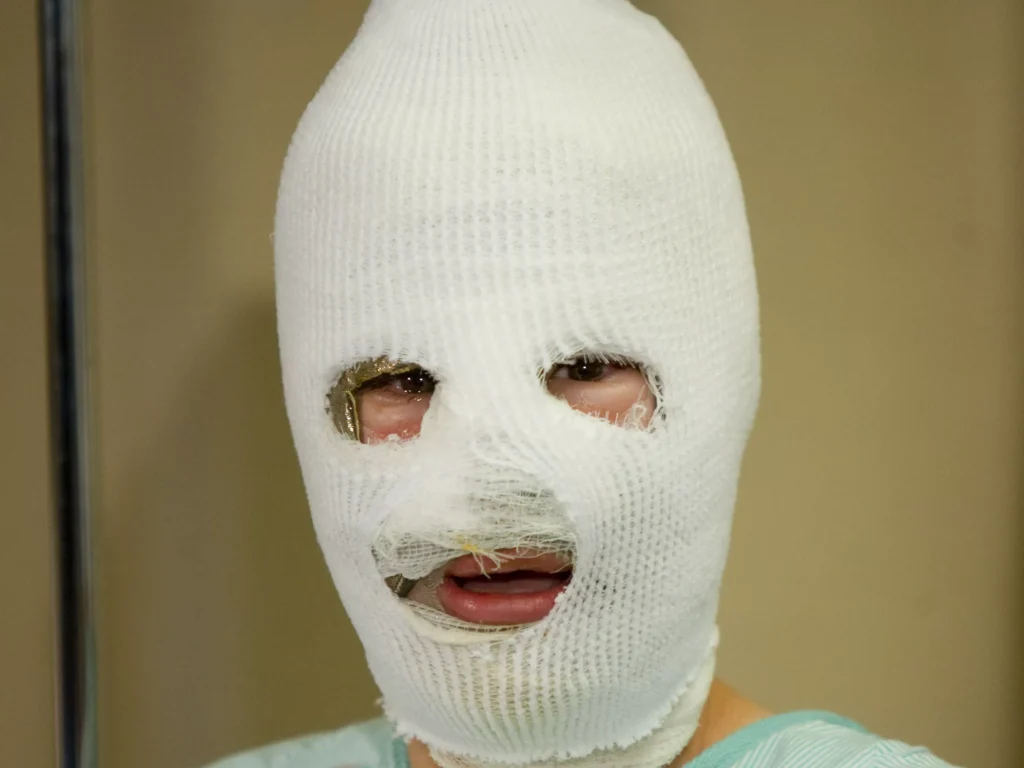
Reports are easier for a court to follow when the fracture is named and then translated into what it actually affects. The common patterns and their functional consequences are set out below.
| Fracture pattern | What it typically affects |
|---|---|
| Nasal bones | Nasal airway, shape of the nose, sense of smell in some cases |
| Orbital floor, often called a blowout fracture | Eye position, double vision on upward gaze, numbness in the cheek and upper lip from infraorbital nerve involvement |
| Zygomaticomaxillary complex, the cheekbone | Facial contour, mouth opening if the arch impinges on the coronoid process, infraorbital sensation |
| Mandible | Bite and occlusion, chewing, sensation in the lower lip and chin from inferior alveolar nerve involvement |
| Le Fort I, II and III | Occlusion, midface height and projection, and in higher patterns the relationship between the face and the skull base |
| Frontal sinus | Forehead contour, sinus drainage, and a risk of late complications if the drainage pathway is not addressed |
Naming the pattern is not the point of the exercise. The point is that each pattern predicts a specific set of things to look for in the records, and an absent examination finding is often more informative than a present one.
The Early Hospital Assessment and Where It Goes Wrong
Most facial trauma is managed competently. When a case does turn on the early assessment, it usually turns on one of a small number of recurring points.
Eye assessment is the first. An orbital injury needs visual acuity and eye movements recorded, and a patient who cannot see properly out of one eye after a facial injury needs that documented and acted on rather than attributed to swelling.
Sensory testing is the second. Numbness in the distribution of the infraorbital or inferior alveolar nerve is a finding that should be recorded at presentation, because without a baseline nobody can later say whether the deficit was caused by the injury or by the operation to fix it.
Imaging is the third. A plain film can miss what a CT would show, and where the mechanism suggests a midface or orbital fracture the choice of imaging is a legitimate subject for an expert to comment on.
Head injury is the fourth. Facial fractures and intracranial injury share a mechanism, and the criteria for imaging the head are set out in NICE guideline NG232 on head injury assessment and early management. Whether those criteria were applied is a question of record rather than opinion.
Common Grounds of Complaint in Facial Trauma Cases
Where a facial trauma case becomes a clinical negligence claim rather than a personal injury one, the allegations tend to fall into four groups. A missed or late-diagnosed fracture. An inadequate reduction, where the bone was fixed but not in the right position. A nerve injury caused or worsened during surgery. And an approach or incision that produced a worse scar than the alternative would have done.
Each of these has a defence that is often correct. Swelling genuinely does hide fractures in the first days. Some nerve deficits follow the injury and not the operation. Some scars are the unavoidable price of adequate access. The expert’s job is to say which explanation the records actually support, not to pick the one that suits the instruction.
Function, Appearance and the Two Heads of Loss
A useful report keeps the functional and the cosmetic consequences apart, then says how they interact. Functional loss covers double vision, restricted mouth opening, an altered bite, nasal obstruction, altered sensation and weakness of facial movement. Cosmetic loss covers scarring, asymmetry, contour change and altered eye position. Both belong in a report written for the court rather than for treatment, which is what medico-legal work means.
They interact because a change in bone position can be both at once. A cheekbone that has healed a few millimetres out of position may be visible in photographs and may also sit the eye lower than its fellow. Reporting that as a single blurred complaint of a poor outcome makes it harder for anybody to value.
Where scarring is a significant part of the claim, structured scar assessment gives the court something more durable than an adjective. The Vancouver Scar Scale and comparable scoring tools allow the same scar to be described consistently by different assessors and at different points in time.
Timing, and Why the Picture Takes Months to Settle
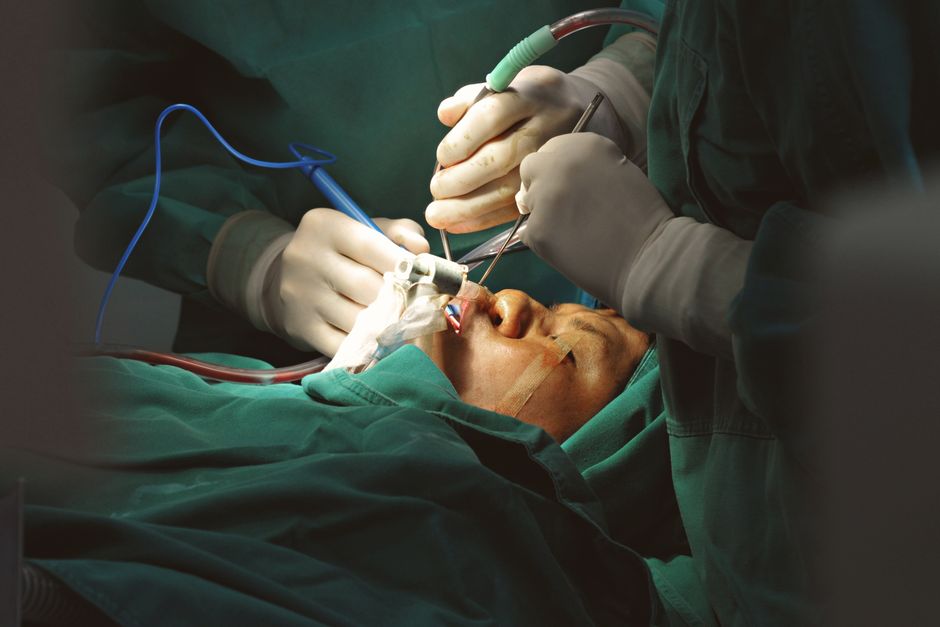
Examining a facial injury too early produces a report that has to be revised. Swelling distorts contour and asymmetry for weeks. Scars remain red and raised for months and continue to change afterwards. Sensory recovery in an injured branch of the trigeminal nerve can continue for a long period, so a numbness recorded at three months may not be the numbness the claimant is left with.
The practical consequence for a solicitor is that an early examination is worth doing for liability and causation, and a later one is needed for prognosis and quantum. Saying so at the outset is more useful than producing one report that has to be caveated on every page.
Where Facial Trauma Claims Arise
The same injury reaches the courts through several different routes, and the route changes what the report has to address.
Road traffic collisions and workplace accidents come through the personal injury route, where causation is usually straightforward and the argument is about severity and permanence. Assaults may run through the criminal courts and a compensation scheme at the same time, where the mechanism of the wound itself becomes a live question. Sporting injuries raise questions about protective equipment and return to play. Clinical negligence claims arise where the injury was managed rather than caused by the treating team.
What the Expert Report Needs to Cover
A facial trauma report that a court can use will set out the mechanism of injury, the fracture pattern and soft tissue injury as recorded and as found on examination, the treatment given and its timing, the current functional deficit tested rather than reported, the current appearance described objectively, the prognosis with and without further surgery, and the basis for each opinion.
It also has to comply with CPR Part 35 and its practice direction, including the statement of truth, the declaration of the expert’s duty to the court, and a clear statement of the range of opinion where a range genuinely exists. The rule itself is short and is worth reading in the original at Part 35 of the Civil Procedure Rules.
Photographs deserve a specific mention. Standardised clinical photographs taken in consistent lighting and position are far more useful to a court than the photographs that arrive in the bundle, and where they exist from the treating unit they should be requested rather than assumed to be absent.
Frequently Asked Questions
How long after a facial injury should the claimant be examined? For liability and causation, as soon as the records are available. For prognosis and quantum, once swelling has resolved and the scars have matured, which is usually a matter of many months rather than weeks after the last procedure.
Does a facial trauma claim need a plastic surgeon or a maxillofacial surgeon? It depends on what is in issue. Where the argument is about bone position, occlusion and fracture management, a surgeon who manages those fractures is the right expert. Where the argument is about scarring, soft tissue reconstruction and appearance, a plastic surgeon is. Cases that involve both sometimes need two reports, and saying so early is cheaper than discovering it late.
Can numbness after a facial fracture be attributed to the surgery? Sometimes, and only where the records allow it. If sensation was documented as intact before the operation and absent afterwards, that is a strong sequence. If it was never tested at presentation, the honest answer is that the cause cannot be determined from the records, and the report should say that rather than choose.
Is scarring valued separately from the fracture? Facial scarring is assessed on its own criteria, including the site, size, colour and permanence of the scar and its effect on the individual. That assessment sits alongside the functional consequences of the underlying injury rather than replacing them.
What if further surgery might improve the result? The report should say what the further surgery would involve, what it could realistically achieve, and what it could not. An opinion that revision surgery is available is incomplete without an opinion on how much of the deficit it would actually correct.
Prof. Hindocha accepts instructions on facial trauma from claimant and defendant solicitors and as a single joint expert. If you have a case with a facial injury element, the plastic surgery expert witness page sets out the scope of the work, and you can send the papers through instruct an expert.
Related reading
- Facial Scarring and Disfigurement Claims
- How Correcting a Facial Deformity Is Judged Medicolegally
- Open Fractures and Negligence in Orthopaedic Trauma
This article is general information about how facial trauma is assessed in a medicolegal context. It is not clinical advice for any individual and it is not legal advice on any particular claim.