Compensation for facial scarring sits at the top of the scarring damages scale because visibility and psychological impact, not the size of the mark itself, are what the Judicial College Guidelines actually reward. A facial scar compensation award turns on how the scar reads to other people and on what living with it has done to the person, so a small scar with genuine, evidenced psychological harm behind it can be worth more than a larger one that carries no such evidence.
Prof. Sandip Hindocha, a Consultant Plastic Surgeon who prepares scarring and burns expert reports, assesses both the physical scar and its psychological sequelae, because a facial disfigurement claim built on the physical evidence alone usually leaves genuine value on the table.
In short: facial disfigurement is treated differently from scarring elsewhere on the body because of how visible it is in everyday social contact, and because the psychological research consistently shows a real, measurable impact on people living with it. A properly evidenced claim documents both the physical scar and that psychological dimension, since the guidelines reward the whole picture, not just what a photograph can show.
What Counts as Facial Disfigurement
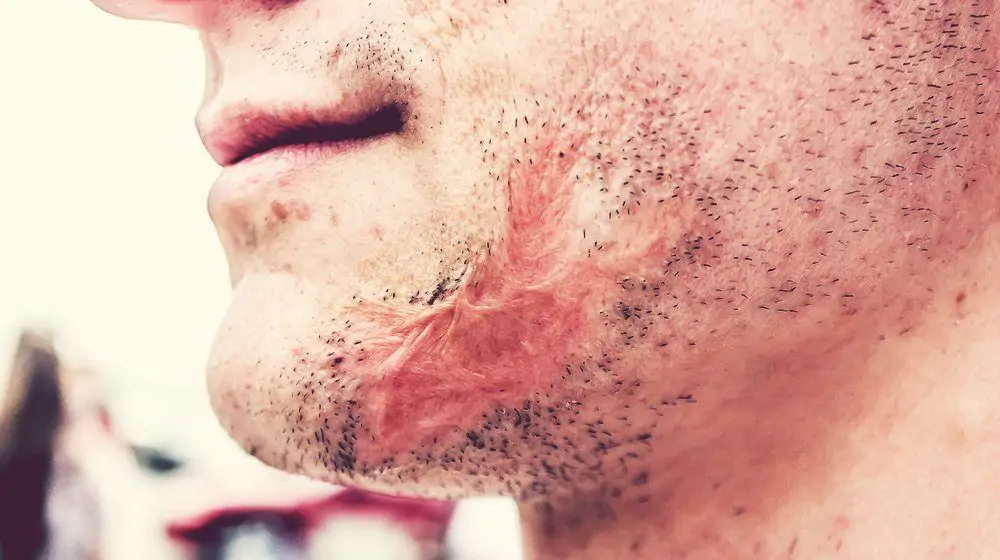
Facial disfigurement covers any permanent visible change to the face, whether from a scar, burn, tissue loss, or altered symmetry, that’s noticeable during ordinary social contact. It doesn’t need to be dramatic to matter legally, a mark that’s consistently visible at a normal conversational distance is enough to bring a claim into the facial disfigurement category rather than being treated as trivial.
The cause varies widely, road traffic collisions, assaults, dog bites, burns, and surgical or clinical negligence all produce facial disfigurement claims, and the legal approach to valuing the injury is broadly the same regardless of mechanism.
Why Facial Disfigurement Claims Are Valued So Highly
As set out in how the Judicial College Guidelines value scarring, facial scarring sits in its own chapter and, for comparable severity, is generally valued more highly than scarring elsewhere on the body. The face is difficult to conceal, is central to how people are recognised and how they present themselves, and carries a social weight that scarring on the torso or upper arm doesn’t.
That higher valuation isn’t just a legal convention, it reflects a genuine, well-documented difference in impact, which is why the psychological evidence behind a facial disfigurement claim matters so much.
The Psychological Research Behind the Higher Valuation
The link between visible facial difference and psychological harm isn’t just anecdotal, it’s a well-established area of clinical research in its own right.
Anxiety, Depression and Social Avoidance
Research summarised by the British Psychological Society points to elevated rates of clinical anxiety and depression among people with a visible facial difference, in some studies comparable to rates seen in people living with chronic pain. Social avoidance, reduced confidence, and a lasting effect on body image are all common, whether the disfigurement has been present from birth or was acquired through injury.
How Common Visible Difference Actually Is
According to Changing Faces, the UK charity for people with visible differences and disfigurements, nearly one in five people in the UK self-identify as having a visible difference. That scale is part of why the psychological dimension of a facial disfigurement claim is taken so seriously, it’s a well-recognised, well-researched experience rather than a niche concern.
How Much Compensation a Facial Scar Attracts
There is no single figure. The Judicial College Guidelines set brackets rather than fixed sums, and where a case falls within a bracket depends on how severe and how visible the disfigurement is, the age of the injured person, and the psychological reaction to it. How the Judicial College Guidelines value scarring explains how those brackets are structured.
An online facial scar compensation calculator works from those same brackets, so it can indicate a range. What it cannot do is weigh the two things that decide where inside that range a case sits, which are how the scar reads to another person at normal conversational distance and what the medical evidence says about permanence and the realistic prospect of revision surgery. Both of those come from the expert report.
Where facial scarring was caused by a crime of violence rather than by negligence or an accident, the route may be the Criminal Injuries Compensation Authority rather than a civil claim. That scheme pays a set amount for each listed injury instead of valuing the loss case by case, so the medical evidence is still needed but the valuation mechanism is not the one the Guidelines describe.
Visibility at a Normal Social Distance
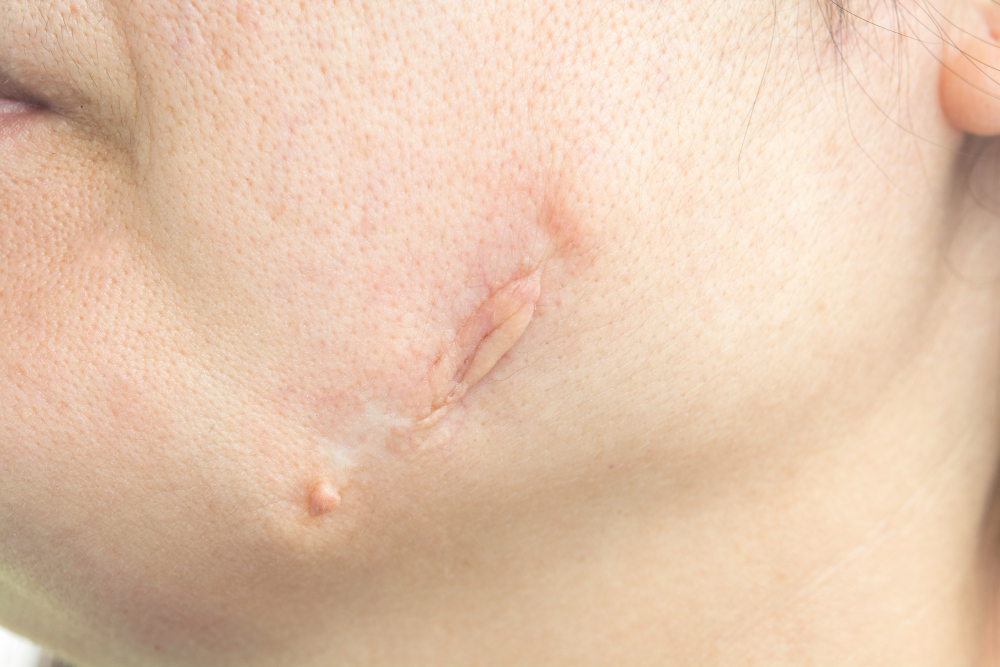
A key test in valuing facial disfigurement is how noticeable the mark is during ordinary conversation, not under close inspection. A scar that’s only visible up close is treated differently from one that’s obvious the moment someone looks at the claimant’s face.
Lighting, expression, and movement all affect this in practice, which is why a proper assessment examines the scar in different conditions rather than relying on a single static photograph.
Permanence and the Realistic Prospect of Improvement
A disfigurement that’s likely to fade, respond to treatment, or improve with time is valued differently from one that’s genuinely permanent. This is why an expert report needs a considered prognosis, not just a description of how the scar looks on the day of examination.
Where further surgery or treatment could realistically help, that possibility, and its cost, forms part of the claim rather than being treated as a reason to discount the injury’s severity now.
Age, Occupation and Individual Circumstances
The guidelines allow individual circumstances to shift a claim within its band. A young claimant, or someone whose occupation involves regular face-to-face public contact, is often valued more highly than someone for whom facial appearance plays a smaller day-to-day role, because the disfigurement’s practical and social impact genuinely differs between the two.
This isn’t about treating people unequally, it reflects that the same physical injury can cause a meaningfully different level of harm depending on who it happens to.
Disfigurement Beyond Personal Injury: The Equality Act 2010
Facial disfigurement has legal significance outside personal injury claims too. Under Schedule 1 of the Equality Act 2010, a severe disfigurement is automatically treated as having a substantial adverse effect on a person’s ability to carry out normal day-to-day activities, one of the tests for disability under the Act, without needing separate evidence of that effect.
This matters in employment and discrimination contexts, and it also reinforces the same point the compensation guidelines reflect: the law recognises facial disfigurement as inherently significant, not something that needs to be argued into relevance case by case.
What Evidence a Facial Disfigurement Claim Needs
A properly evidenced claim goes beyond a description of the scar. It typically includes clinical examination, photographs taken in consistent conditions, and validated scoring using tools such as the Vancouver Scar Scale and POSAS, which turn a subjective impression into a documented, repeatable measure.
Medical and treatment records, and a clear account of how the disfigurement affects the claimant’s daily life and occupation, all strengthen the case for where within a band the claim should sit.
The Role of Psychological Assessment Alongside the Physical Report
Given how central psychological impact is to valuing facial disfigurement, a formal psychological assessment is often what separates a well-evidenced claim from one that undersells its own value. A surgical expert can identify where that assessment is warranted and explain how the physical and psychological findings relate to each other. The psychological ground is approached differently again where the disfigurement follows elective surgery, because the starting point is what the patient expected the result to look like.
This combined approach is also what lets a report withstand scrutiny under CPR Part 35, since it addresses both halves of the injury rather than leaving the psychological dimension to be raised, and potentially disputed, later in proceedings.
Common Mistakes That Undervalue a Disfigurement Claim
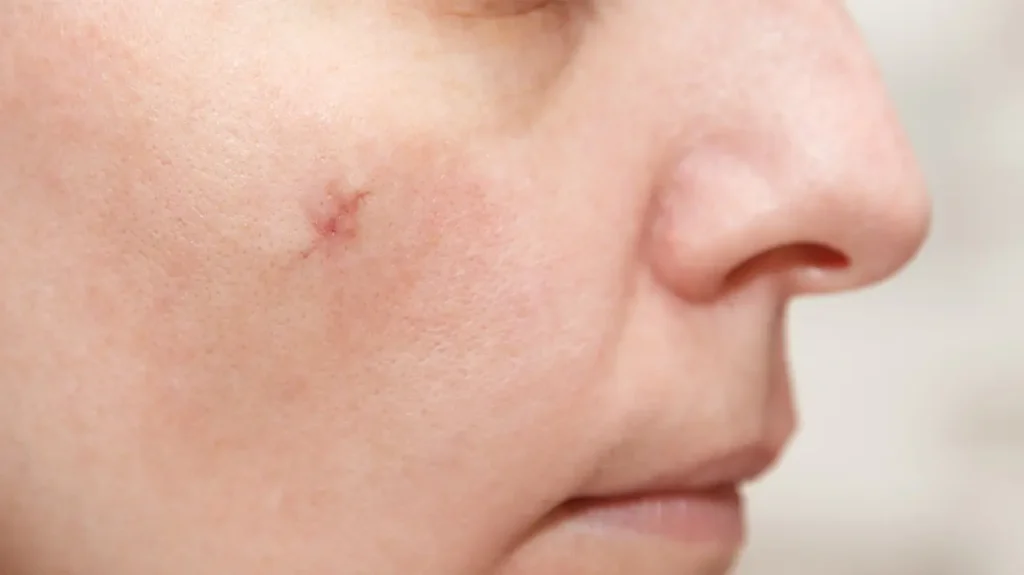
The most frequent mistake is treating the claim as purely physical, relying on a photograph and a brief description without any psychological evidence or a considered prognosis. As explained in how scarring claims are valued in the UK, this alone can leave a claim sitting at the bottom of its band, or even in the wrong band, regardless of how visible the disfigurement actually is.
Assessing too early, before the scar has matured, or too late, without documenting how it looked and felt at an earlier stage, can also weaken the evidence. A properly timed, independent expert assessment avoids both problems. Timing is a matter for CPR Part 35. Whether the assessor is fit to act as an expert at all is a separate question, governed by GMC and professional body regulation.
Frequently Asked Questions
What makes a scar count as facial disfigurement? Any permanent, noticeable change to the face visible at a normal social distance can count, regardless of its cause. It doesn’t need to be dramatic, consistent visibility during ordinary contact is what matters.
Why is facial disfigurement valued more highly than scarring elsewhere? The face is difficult to conceal and central to social interaction and identity, and the psychological research consistently shows a greater documented impact than scarring in less visible locations.
Does a facial disfigurement claim need psychological evidence? In practice, yes, if the psychological impact applies. Because so much of the valuation depends on that dimension, a claim built on physical evidence alone often undersells its true value.
Is facial disfigurement automatically treated as a disability? Under the Equality Act 2010, severe disfigurement is automatically treated as having a substantial adverse effect on daily activities, one of the legal tests for disability, without needing separate proof of that effect. This applies in employment and discrimination law, separately from personal injury compensation.
How common is visible facial difference in the UK? According to Changing Faces, nearly one in five people in the UK self-identify as having a visible difference, making it a well-recognised and well-researched experience rather than a rare one.
Prof. Hindocha prepares CPR Part 35 compliant scarring and burns reports for solicitors and insurers across England and Wales, addressing both the physical scar and its psychological impact. Details of his scarring and burns expert witness services and how to instruct him are on the site.
Related reading
- How the Judicial College Guidelines Value Scarring
- When a Surgical Scar Becomes a Negligence Claim
- Keloid Scarring and Compensation
- Forensic surgery expert witness reports
This article is general information about how facial disfigurement claims are assessed and is not a substitute for legal or medical advice on a specific case.