
The Judicial College Guidelines value scarring by placing a case into one of several bands, running from trivial to very severe, set out in two separate chapters: one for facial scarring, one for scarring elsewhere on the body. A solicitor identifies the right chapter, finds the band that best fits the scar’s visibility, permanence and psychological impact, then argues where within that band the specific case should sit.
Prof. Sandip Hindocha, a Consultant Plastic Surgeon who prepares scarring and burns expert reports, works from the same guidelines that solicitors and judges use, so the clinical evidence in his reports maps directly onto the bands a court will actually apply.

In short: the Judicial College Guidelines (JCG) are a banded reference book, not a price list. Each band covers a range of severity, the exact figures are uplifted for inflation with every new edition, and where a case lands within a band depends on evidence, not just the type of injury. Understanding the band structure is what lets a solicitor argue for the top of a range rather than the bottom, and it’s what a scarring expert’s report is ultimately written to support.
What the Judicial College Guidelines Actually Are
The Judicial College is the body responsible for training judges in England and Wales, and one of its best-known outputs is a guidelines book used to assess general damages, the compensation paid for pain, suffering and loss of amenity, in personal injury and clinical negligence claims.
The guidelines don’t set a legal rule. They summarise how courts have valued similar injuries in the past and organise that experience into bands, so that judges, solicitors and insurers are working from a shared, consistent reference rather than each starting from scratch.
Why Courts and Solicitors All Work From the Same Document
Before the guidelines existed in their current form, valuing an injury meant digging through old case reports for a broadly comparable claim. The JCG replaced that with a single, regularly updated reference that both sides of a dispute recognise.
That shared starting point is what makes negotiation possible. A defendant insurer and a claimant solicitor can disagree about where in a band a case sits without disagreeing about which band applies or what the range is, which narrows the argument to the facts that actually matter.
How the Scarring Guidance Is Split Into Two Chapters
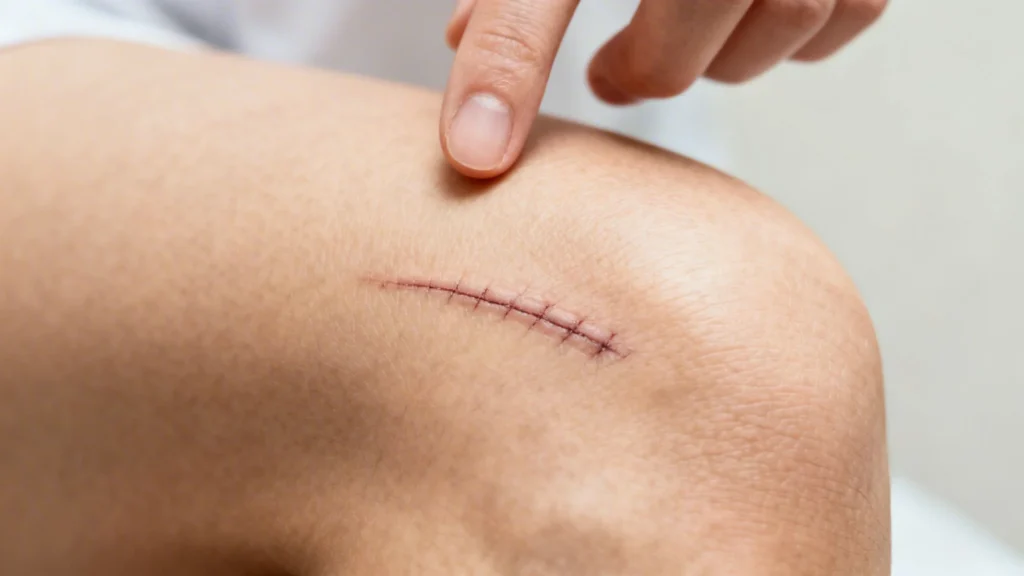
Scarring isn’t covered by a single set of bands. The guidelines separate facial scarring from scarring anywhere else on the body, because the two carry very different levels of visibility and social impact.
The Facial Scarring Chapter
Facial scarring sits in its own chapter and, for comparable severity, tends to be valued more highly than scarring elsewhere. A face is difficult to conceal, and the guidelines reflect that visibility carries real, lasting social and psychological consequences.
The Chapter for Scarring Elsewhere on the Body
A separate chapter covers scarring to the trunk, limbs and other non-facial areas. Awards here are generally lower for a similar-sized scar, since the scarring is less consistently visible, though a scar on the hands or neck is treated differently from one hidden by clothing.
The Band Structure, From Trivial to Very Severe
Within each chapter, the guidelines set out a small number of bands running from the least serious scarring to the most severe. The table below describes what each tier generally represents, rather than quoting figures, since the exact bracket values are uplifted at every new edition and a figure copied from an old edition is often several years out of date by the time it’s read.
| Band | What it generally represents |
| Very severe | Substantial disfigurement with a marked psychological impact, often in a younger claimant |
| Less severe | Significant scarring where the psychological reaction is more moderate, or the disfigurement itself is less pronounced |
| Significant | Noticeable scarring with a real, but more contained, cosmetic and psychological effect |
| Less significant | Modest scarring with some continuing effect on appearance or confidence |
| Trivial | Minor marks with little to no lasting cosmetic or psychological effect |
For the current bracket values, always check the latest published edition directly rather than a figure quoted online, since a recent-looking source can still be a full inflationary uplift out of date.
What Actually Moves a Case Between Bands
As covered in how scarring claims are valued in the UK, the deciding factors are visibility, permanence, and evidenced psychological impact, not the length or surface area of the scar alone.
Two scars of a similar size can sit in different bands entirely. A small facial scar in a young person, with documented anxiety about their appearance, will usually be valued higher than a larger scar in a low-visibility location with no psychological evidence behind it.
How a Solicitor Uses a Band in Practice
In practice, a solicitor reads the medical and expert evidence, identifies the chapter and band that best fits the injury, and then builds an argument for where within that band the case belongs, usually the top end if the evidence supports it. Where that evidence comes from a single joint expert instructed by both parties, the same report has to serve the band argument on both sides.
This is set out in the Particulars of Claim and used as the anchor for settlement negotiations. Both sides can disagree about the position within a band while still agreeing on the band itself, which is usually where a case is actually contested.
The Guidelines Are a Starting Point, Not a Fixed Price

Judges aren’t bound to award a figure from within a band. The guidelines are persuasive, not mandatory, and a court can depart from them where the individual facts genuinely justify it.
In the great majority of cases, though, the final award does land within the relevant band, because the bands themselves were built from real court decisions and are kept under regular review to stay consistent with them.
Why the Figures Change With Every Edition
The bracket values are periodically uplifted for inflation, using the Retail Prices Index, so that older awards keep pace with the cost of living. The banding structure and the factors that matter within it generally stay stable, only the figures move.
Because of this, an edition that’s even a couple of years old can already understate what a claim is currently worth, which is why solicitors always work from the latest published edition rather than a saved figure from a previous one.
What the 18th Edition Changed
The 18th edition of the guidelines was published on 9 April 2026, applying roughly an 8.26% uplift based on the Retail Prices Index as at August 2025.
As legal commentary on the new edition has noted, the editors anchored this uplift specifically to RPI data up to August 2025, and further inflation beyond that date can still be argued for separately when a case is assessed. The scarring chapters kept their existing structure, the change was to the figures, not the framework.
Where the Guidelines Fall Short
The bands describe a range of severity, but they don’t remove the need for genuine clinical evidence. Simply asserting that a scar is “significant” rather than “less significant” carries little weight without an assessment behind it.
They also can’t fully capture every individual’s circumstances. Occupation, age, and how visible a scar is in someone’s actual daily life all matter, and the guidelines rely on the medical evidence to bring that detail into the case.
How Expert Evidence Supports a Guidelines-Based Valuation
An independent expert assessment gives the band argument something to stand on. Clinical examination, photographs, and validated scoring such as the Vancouver Scar Scale and POSAS turn a subjective description into a documented, repeatable measure of severity and permanence.
A report built this way is what allows a solicitor to argue confidently for a specific position within a band, and what lets that argument hold up under CPR Part 35 if the other side contests it.
Frequently Asked Questions
What are the Judicial College Guidelines? They’re a regularly updated reference book used by courts, solicitors and insurers in England and Wales to assess general damages in personal injury and clinical negligence claims, organised into chapters and bands by type and severity of injury.
Are judges required to follow the guideline bands? No. The guidelines are persuasive rather than binding, but because the bands are built from real court decisions and reviewed regularly, most awards do land within the relevant range.
Why are facial scars valued differently from scars elsewhere on the body? Facial scarring has its own chapter because it’s generally more visible and carries a greater documented psychological and social impact, so comparable severity is usually valued more highly there than in the body-scarring chapter.
How often do the guideline figures change? They’re uplifted periodically for inflation, most recently in the 18th edition, published in April 2026. The banding structure tends to stay stable between editions, only the bracket values move.
Do I need expert medical evidence to rely on a particular band? In practice, yes. The bands describe a range, but it takes a proper clinical assessment, not just a description, to support an argument for where a specific case should sit within that range.
Prof. Hindocha prepares CPR Part 35 compliant scarring and burns reports for solicitors and insurers across England and Wales, using clinical examination and validated scoring to support a claim’s position within the Judicial College Guidelines. Details of his scarring and burns expert witness services and how to instruct him are on the site.
Related reading
- How Are Scarring Claims Valued in the UK?
- Facial Scarring and Disfigurement Claims
- Acid Attack and Assault Scarring Claims
This article is general information about how the Judicial College Guidelines are structured and is not a substitute for legal advice on a specific case.