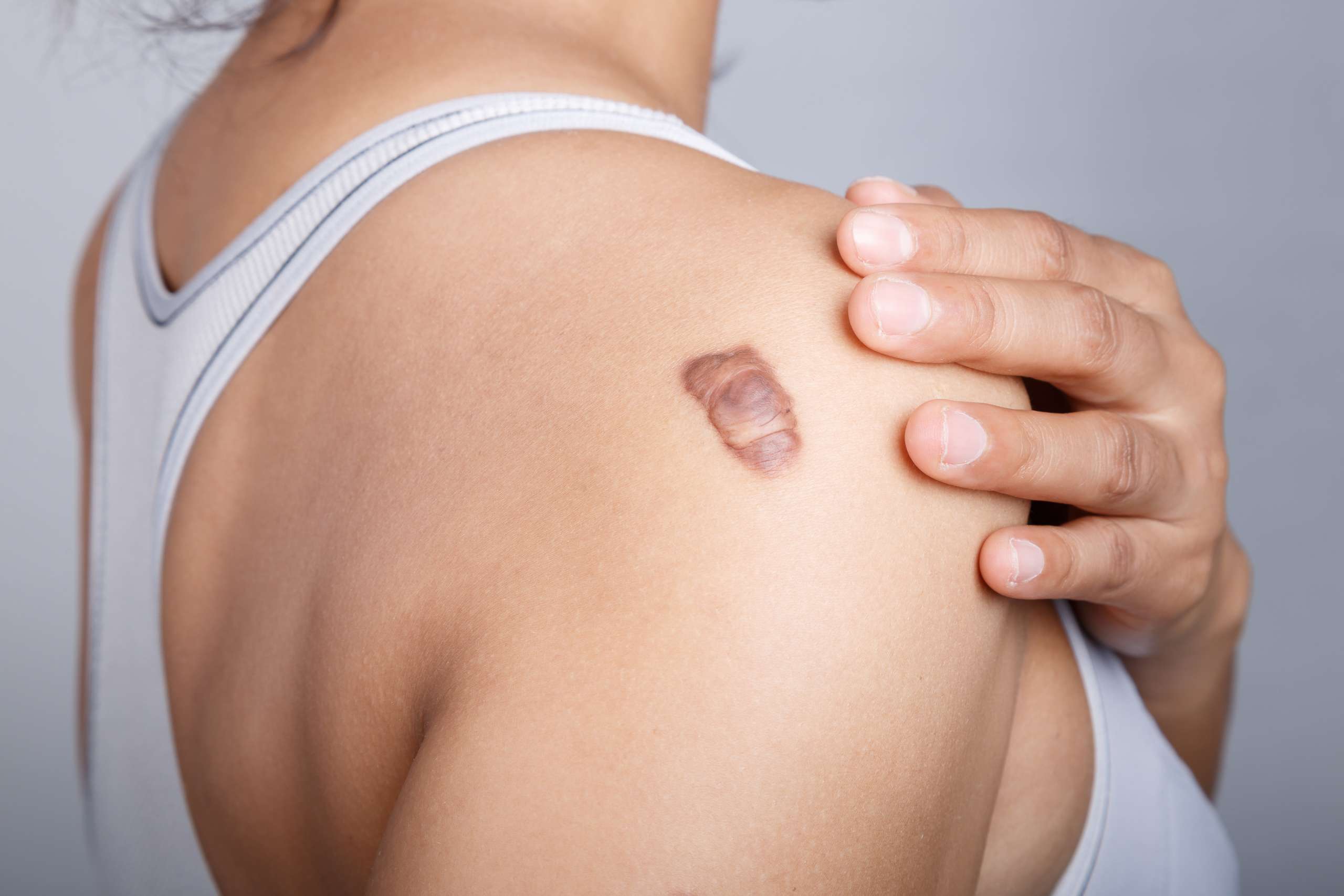
Keloid scarring compensation tends to sit higher than compensation for an ordinary scar of the same size, because keloids are harder to treat, prone to coming back, and often keep growing beyond the original wound. The value of a claim follows the clinical reality, not just how the scar looks on the day it’s assessed.
A keloid isn’t simply a “bad scar.” It’s a specific, over-active healing response that behaves differently from normal scarring, and that difference has a direct bearing on prognosis, treatment planning, and how the claim should be valued.
In short: keloid scars carry a high recurrence rate even after treatment, which makes permanence more likely and future treatment costs harder to predict than with an ordinary scar. That combination generally supports a higher award than an equivalent-sized scar that’s expected to settle and fade. Keloid scarring can occasionally found its own negligence claim too, where a surgeon failed to warn a known high-risk patient or used a technique that made keloid formation more likely.
Prof. Sandip Hindocha assesses keloid scarring as part of his scarring and burns expert witness practice, drawing on over two decades of experience in scar reconstruction.
What Makes a Scar a Keloid Rather Than Hypertrophic
Keloid and hypertrophic scars are often confused, but they behave differently. A hypertrophic scar stays within the boundary of the original wound and often improves over time. A keloid extends beyond that boundary into surrounding healthy skin, and can keep growing months or years after the injury healed.
Keloids are more likely on the chest, shoulders, earlobes, and jawline, areas of higher skin tension, and there’s a strong genetic component. Someone who has developed a keloid before is significantly more likely to develop another from a future injury or procedure.
Why Keloid Scars Carry a High Recurrence Rate
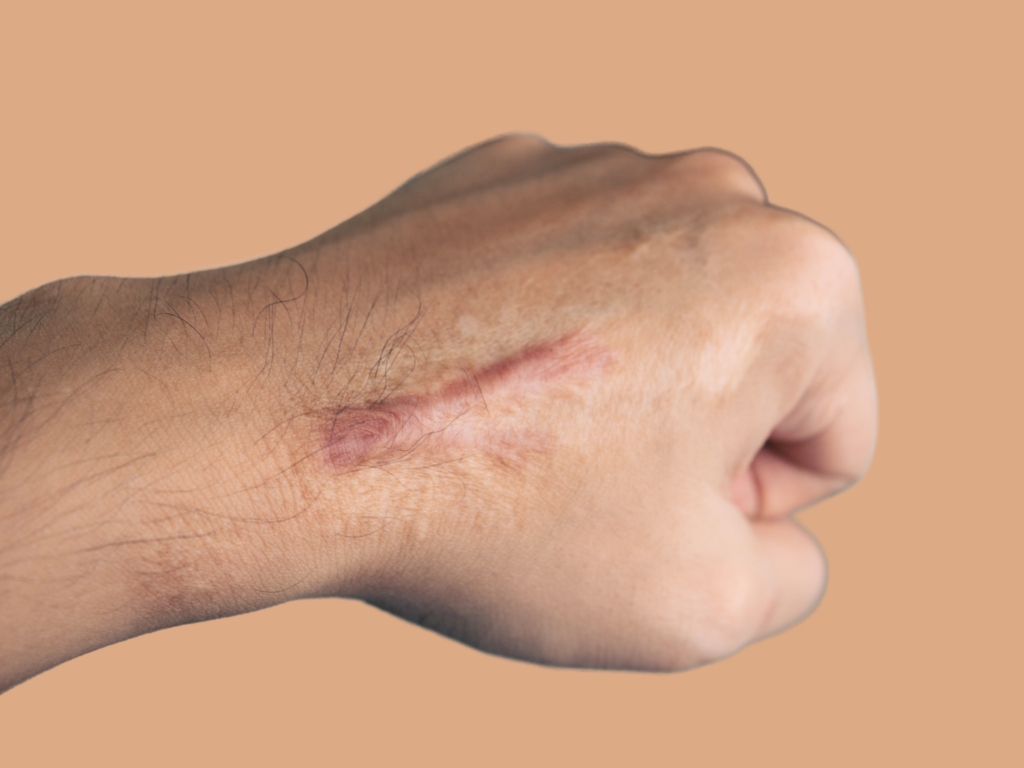
This is the detail that matters most for a claim. Surgical removal alone has a recurrence rate reported at over 50% in some studies, meaning more than half of keloids removed by excision on its own come back.
Combining excision with an adjunct treatment, corticosteroid injection, radiotherapy, or silicone gel therapy, improves that picture but doesn’t eliminate the risk. Even with combination treatment, published follow-up data shows control rates that decline over time rather than a single successful outcome.
Why This Recurrence Risk Matters for Compensation
A scar that’s expected to fade or respond well to treatment is generally valued differently from one that’s likely to persist regardless of what’s done about it. Keloid scarring tends to fall into the second category.
This affects two things in a claim, the assessment of permanence, and the projection of future treatment costs. Because keloids often need repeated intervention with no guarantee of success, a properly prepared report needs to set out realistic treatment prospects rather than assume a single procedure will resolve things.
Can Keloid Scarring Itself Be a Negligence Claim
Developing a keloid isn’t, by itself, evidence that anything went wrong. It’s a recognised, idiosyncratic healing response that can happen after entirely competent surgery. But there are circumstances where the way it was handled can support its own claim.
Failing to Warn a Known High-Risk Patient
Where a patient has a personal or family history of keloid scarring, or is having surgery in a high-risk area such as the chest or ear, that risk is material and should be discussed as part of informed consent. A failure to warn a patient who would have made a different decision with that information can support a claim in its own right, separate from the surgery itself.
Technique That Increases Keloid Risk
Excess wound tension, closure under strain, or an incision that ignores skin tension lines can increase the likelihood of keloid formation. Where a competent surgeon would have recognised the risk and adjusted technique accordingly, that failure can be assessed as a breach in the same way as any other technique error.
How a Keloid Scarring Claim Is Actually Valued

Keloid scarring falls within the same general damages framework as other scarring, valued against the Judicial College Guidelines according to visibility, permanence, and psychological impact. What changes with a keloid is how those factors are assessed, not the framework itself.
Because keloids can continue to grow and rarely resolve completely, permanence is usually treated as more likely than with an ordinary scar. Visible location, such as the neck, jawline, or chest in someone whose clothing doesn’t always cover it, pushes the assessment higher still, and documented psychological impact from a growing, treatment-resistant scar carries real weight.
What Evidence Supports a Keloid Scarring Claim
A proper report needs to confirm the diagnosis is genuinely a keloid rather than a hypertrophic scar, since the two carry different prognoses and that distinction affects the whole valuation. From there, it should set out the realistic treatment options available, the likely success rate of each, and a genuine assessment of whether the scarring is likely to be permanent.
Where the claim also involves an allegation that the keloid resulted from inadequate warning or poor technique, the report needs to address consent and surgical standard of care as a separate question from the scar’s current severity.
| Keloid Scar | Hypertrophic Scar | |
| Growth pattern | Extends beyond the original wound, can keep growing | Stays within the wound boundary |
| Typical timeline | Can develop or worsen months to years later | Usually improves within 12 to 18 months |
| Recurrence after excision alone | Reported above 50% | Uncommon |
| Genetic link | Strong | Weaker |
| Effect on claim value | Permanence more likely, higher future treatment cost | Improvement expected, often lower award |
Frequently Asked Questions
Is keloid scarring compensation higher than for a normal scar? Usually, yes, for a comparable size and location. Keloid scars have a high recurrence rate even after treatment, which makes permanence more likely and increases the likely future treatment cost, both of which tend to push the valuation higher than an equivalent scar expected to settle.
Can I claim for a keloid scar that developed after surgery? Developing a keloid isn’t automatically negligence, since it can happen after entirely competent surgery in someone prone to it. A separate claim may be possible if a known risk wasn’t disclosed as part of consent, or if a technique that increased the risk fell below the standard a reasonable surgeon would have used.
How do doctors tell a keloid apart from a hypertrophic scar? The main distinction is whether the scar stays within the original wound boundary. A hypertrophic scar does and tends to improve over time. A keloid extends into surrounding skin and can continue growing well after the original injury has healed.
Does treatment reduce the value of a keloid scarring claim? Not automatically. Because even combination treatment carries a meaningful recurrence risk, ongoing or planned treatment is usually factored into the claim as an evidenced future cost rather than treated as resolving the scarring for valuation purposes.
Do I need an expert report to bring a keloid scarring claim? In practice, yes. Confirming the diagnosis, setting out realistic treatment prospects, and assessing permanence all depend on a proper clinical assessment rather than a visual description of the scar.
Prof. Hindocha prepares CPR Part 35 compliant reports on keloid and other scarring for solicitors and insurers across England and Wales. Details of his scarring and burns expert witness services and how to instruct him are on the instruction page.
Related reading
- What Is the Vancouver Scar Scale?
- When a Surgical Scar Becomes a Negligence Claim
- Contracture Scarring and Loss of Function
This article is general information about keloid scarring and compensation and is not a substitute for legal or medical advice on a specific case.