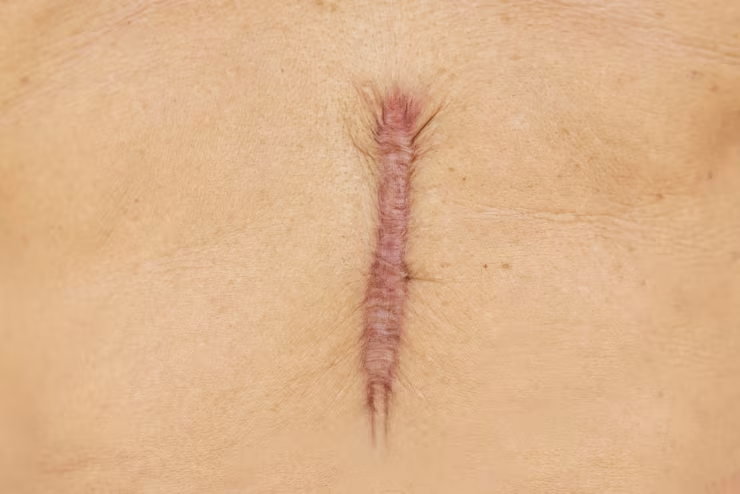
A surgical scar becomes a negligence claim when it can be shown that the scarring came from a breach of the standard of care, not from an accepted risk of the operation, and that this breach is what actually caused or worsened the scar. Most surgical scars, even ones a patient is unhappy with, don’t meet that test.
Prof. Sandip Hindocha, a Consultant Plastic Surgeon who prepares scarring and burns expert reports, assesses exactly this distinction for solicitors and insurers, separating a recognised complication of surgery from a scar that points to substandard care.
In short: a scar alone is never enough to found a claim. What matters is whether the surgical team departed from the standard a reasonably competent surgeon would have met, whether the patient was properly warned of the risk of scarring beforehand, and whether that departure, rather than some other factor, actually caused the outcome. Establishing all three usually needs independent expert evidence.
What Counts as Surgical Scarring Negligence

Surgical scarring negligence describes a case where poor technique, inadequate aftercare, or a failure to warn a patient about the risk of scarring falls below the standard expected of a reasonably competent surgeon, and this failure is what produced, or made worse, a scar the patient wouldn’t otherwise have had.
It sits within the wider field of clinical negligence rather than as a separate legal category. The same principles that apply to a missed diagnosis or a surgical error elsewhere in the body apply here, they’re just being tested against a scar as the resulting harm.
Complication or Negligence, What Actually Separates Them
Surgery of any kind carries a real risk of scarring, and a poor cosmetic result can happen even when every part of the operation was performed correctly. That alone isn’t negligence.
The dividing line is whether the outcome reflects a properly managed, disclosed risk, or a genuine failure in how the surgery or the aftercare was carried out.
When a Poor Outcome Is a Recognised Risk
Every incision heals by forming a scar, and how visibly it heals depends on factors outside a surgeon’s control too, skin type, age, wound location and individual healing response all vary widely between patients.
A surgeon who followed accepted technique, closed the wound appropriately, and warned the patient of the realistic risk of visible scarring beforehand has met the standard of care, even if the result isn’t what the patient had hoped for.
When a Poor Outcome Reflects Substandard Care
A claim becomes realistic where the scarring can be traced to something the surgical team did, or failed to do, that a competent surgeon in the same position wouldn’t have done.
That includes poor suturing technique, an infection that went unrecognised and untreated, a wound that was allowed to break down, or a patient who was never told that visible scarring was a real possibility before they consented to surgery.
| Scenario | Usually treated as |
| Wound heals with a visible scar despite correct technique and a properly disclosed risk | An accepted complication, not negligence |
| Scar results from poor suturing or excessive wound tension | Potential negligence |
| Infection is missed or poorly managed, worsening the scar | Potential negligence |
| Patient was never warned that visible scarring was a realistic risk | Potential negligence, a consent-based claim |
| Keloid or hypertrophic scarring occurs despite risk factors being flagged and managed appropriately | Usually an accepted complication |
The Legal Test Courts Apply

Whether a surgeon’s technique met the required standard is assessed under what’s known as the Bolam test, refined by the House of Lords in Bolitho. A doctor isn’t negligent if their approach is supported by a responsible body of professional opinion within the specialty.
Bolitho added an important qualification. That supporting body of opinion has to be capable of withstanding logical scrutiny, and a court isn’t obliged to accept an expert’s view of the standard just because other clinicians share it, if that view can’t be logically justified, as the UK Centre for Medico-Legal Studies sets out.
In a surgical scarring negligence case, this usually plays out through competing expert reports, one instructed by the claimant, one by the defendant, each addressing whether the technique used and the aftercare provided met that standard. Not every case is run that way. Where the parties agree, the court can instead direct evidence from a single joint expert, one expert instructed jointly, whose single report goes to the court rather than to either side.
Consent and the Duty to Warn of Scarring Risk
A separate route into a claim doesn’t concern technique at all, it concerns what the patient was told beforehand. Since the Supreme Court’s decision in Montgomery v Lanarkshire Health Board, a surgeon must take reasonable care to ensure a patient is aware of any material risk a reasonable person in their position would attach significance to, as the Royal College of Surgeons’ Bulletin has discussed.
Visible scarring is squarely the kind of risk this duty covers, particularly for surgery in a visible or sensitive location, or where a patient’s occupation or circumstances make the visual outcome especially significant to them.
Where a patient can show they were never properly warned of a realistic risk of visible scarring, and that they would have made a different decision, or asked more questions, had they been told, that gap in the consent process can found a claim even where the surgical technique itself was competent.
Common Causes of Negligent Surgical Scarring
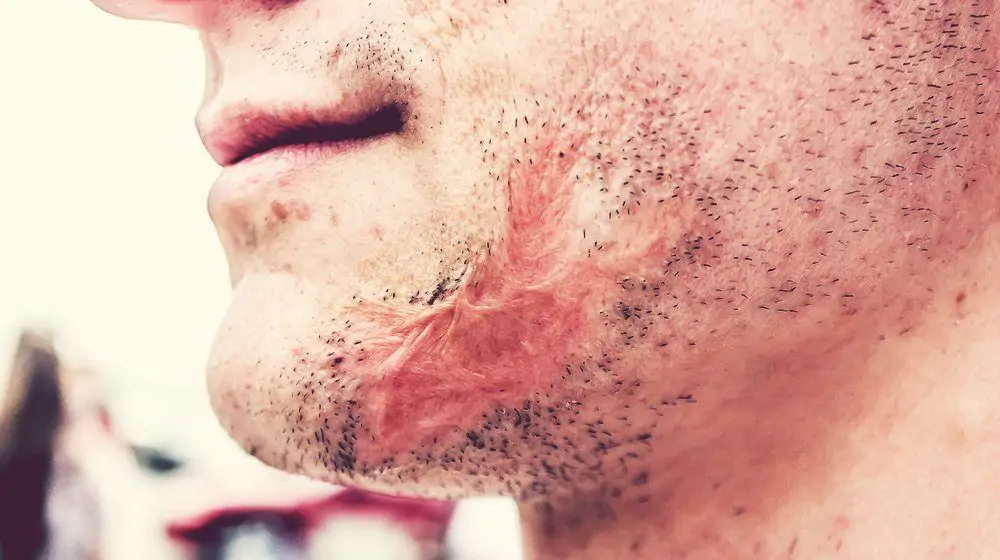
Where surgical scarring negligence claims do succeed, the underlying failure usually falls into one of a small number of recurring categories.
Poor Suturing Technique and Wound Tension
Sutures placed under excessive tension, spaced incorrectly, or left in place too long can distort how a wound heals and widen the resulting scar well beyond what the incision itself would have produced.
Infection and Substandard Wound Care
An infection that develops after surgery isn’t automatically negligence, infections happen even with good care. But a failure to recognise the signs, or a delay in treating one that’s already apparent, can turn a manageable complication into significant, avoidable scarring.
Wound Dehiscence From Technical Error
Wound dehiscence, where a closed wound reopens, can result from infection or excessive strain on the wound as well as from a technical error in how it was closed. Where dehiscence has no other obvious cause, it often points back to the closure technique itself.
Mismanaged Keloid or Hypertrophic Scarring
Some patients are more prone to keloid or hypertrophic scarring, raised scarring that spreads beyond or along the original wound. That tendency isn’t itself a sign of negligence, but a surgeon who fails to identify a known risk factor, or who doesn’t manage an emerging keloid appropriately once it’s apparent, may fall short of the standard expected.
Proving Causation, Not Just Breach
Showing that care fell below the expected standard is only half the claim. A claimant also has to show that this specific failure, not some other factor, is what caused the scarring or made it worse than it would otherwise have been.
This is often the harder half of a scarring case to prove, because scarring has so many genuine contributing factors, skin type, age, wound location and individual healing response among them. Untangling what the breach actually added to that picture is where independent expert evidence does most of its work.
How a Surgical Scarring Claim Is Valued

Once negligence and causation are established, compensation for the scarring itself is assessed using the same Judicial College Guidelines bands used in any personal injury or clinical negligence claim, as covered in how the Judicial College Guidelines value scarring. Visibility, permanence and evidenced psychological impact drive the value, not simply the scar’s length or surface area.
A negligence claim can also include the additional harm the substandard care caused beyond the baseline scarring the patient would reasonably have expected from a competently performed operation, plus any financial losses that followed from it.
Why Independent Expert Evidence Matters
Because the legal test turns on comparing what actually happened to what a competent surgeon would have done, and because causation has to be untangled from the patient’s own healing factors, a scarring negligence claim depends heavily on independent clinical opinion.
An expert report prepared under CPR Part 35 examines the surgical records, the clinical photographs, and the scar itself using validated scoring such as the Vancouver Scar Scale, then gives an opinion on both whether the standard of care was met and what role, if any, that had in the outcome. Details of Prof. Hindocha’s scarring and burns expert witness work are on the site.
Time Limits for Bringing a Claim
A clinical negligence claim, including one centred on surgical scarring, generally has to be brought within three years, either from the date of the surgery or from the date the patient reasonably ought to have realised something had gone wrong, whichever is later. This time limit is set out in the Limitation Act 1980.
That “date of knowledge” test matters in scarring cases specifically, because it can take time for a scar to fully mature and for it to become clear the outcome isn’t simply slow healing. Anyone concerned about a scar from surgery should get advice promptly rather than waiting for that three-year window to narrow.
Frequently Asked Questions
Is a bad scar automatically medical negligence? No. Scarring is a recognised risk of any surgery, and a disappointing cosmetic result can happen even when the operation was performed competently and the patient was properly warned beforehand.
What has to be proved in a surgical scarring negligence claim? A claimant has to show that the care fell below the standard of a reasonably competent surgeon, that this failure, not some other factor, caused or worsened the scarring, and that the scarring caused a measurable loss.
Can I claim if I wasn’t warned my surgery might leave a visible scar? Possibly. Since Montgomery v Lanarkshire, a surgeon has to make sure a patient understands any risk a reasonable person would consider significant, and visible scarring usually qualifies for surgery in an exposed area.
How long do I have to bring a claim? Generally three years from the surgery, or from when you reasonably became aware something had gone wrong, though this can vary between individual cases and is worth checking with a solicitor promptly.
Do I need an expert witness for a surgical scarring negligence claim? In practice, yes. Because the case turns on comparing the care given against an accepted standard, and on separating the effect of that care from the patient’s own healing factors, independent clinical opinion is central to how these claims are proved.
Prof. Hindocha prepares CPR Part 35 compliant scarring and medical negligence reports for solicitors and insurers across England and Wales, assessing both the surgical standard of care and the resulting scar. Details of his medical negligence expert witness work and how to instruct him are on the site.
Related reading
- Plastic Surgery Negligence Explained
- Acid Attack and Assault Scarring Claims
- Facial Scarring and Disfigurement Claims
This article is general information about how surgical scarring negligence claims are assessed and is not a substitute for legal advice on a specific case.