
Correcting a facial deformity is a different category of surgery to elective cosmetic enhancement, and it’s judged by a different medicolegal standard. Where an aesthetic procedure is chosen to change a normal feature, deformity correction addresses something objectively identifiable, a cleft, a post-traumatic asymmetry, the result of disease or its treatment, and that distinction runs through almost every question a claim in this area raises.
In short: facial deformity correction is judged against whether the surgical planning, the choice to involve specialist multidisciplinary care where it was needed, and the eventual result met a reasonable standard for that specific deformity, not against a general aesthetic preference. Because the underlying condition is real and often already causing functional or psychological harm, claims in this area tend to turn on planning, timing and referral decisions as much as on the surgery itself.
Prof. Sandip Hindocha, a Consultant Plastic Surgeon who prepares plastic surgery expert witness reports for solicitors and insurers, is regularly instructed on cases involving corrective surgery for a genuine facial deformity, where the medicolegal questions differ meaningfully from a purely elective aesthetic claim.
What Counts as a Deformity, Rather Than an Appearance Preference
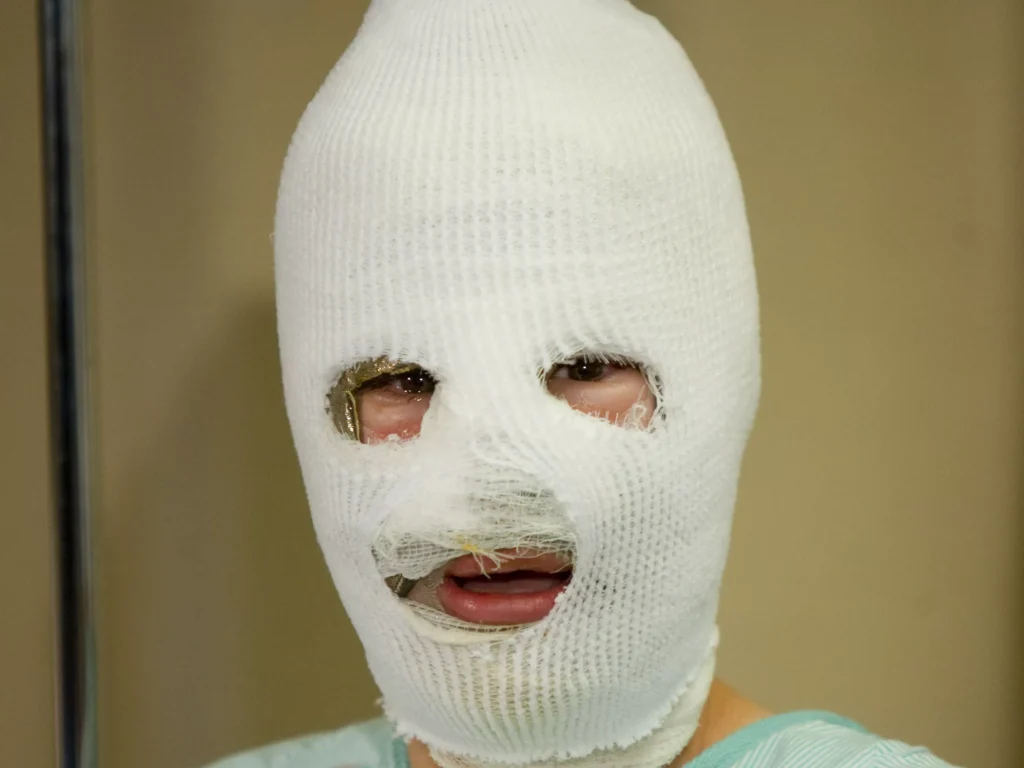
NHS commissioning policy draws this line explicitly, and it’s a useful reference point even outside the NHS system. Procedures addressing conditions resulting from major trauma, burns or significant congenital deformity, or correcting a pathological abnormality causing a significant functional problem, sit on one side. Procedures undertaken exclusively to improve an already-normal appearance sit on the other.
Where a case doesn’t obviously fall into either category, policy allows for individual review of whether the patient’s condition, including facial disfigurement, sets them apart from people with a broadly similar presentation. That same reasoning, is this a genuine, identifiable deformity rather than a variation of normal, tends to run through the medicolegal assessment of these cases too.
Why This Distinction Matters Medicolegally
Claims involving purely elective aesthetic surgery often turn on whether consent was properly informed or whether the patient’s expectations were realistic and properly managed. Those questions still matter in deformity correction, but they sit alongside a separate one, whether the surgical approach chosen, and the specialists involved in choosing it, were appropriate for a condition the patient didn’t choose to have.
That shifts a meaningful share of the scrutiny in these claims toward planning, referral and technique, rather than toward the pre-operative conversation alone.
Congenital, Traumatic and Disease-Related Deformity
Facial deformity correction spans several genuinely different clinical categories. Congenital conditions include cleft lip and palate, microtia and broader craniofacial syndromes, typically identified at or before birth and managed through a planned, staged pathway over many years.
Traumatic deformity follows facial fractures, burns or soft tissue loss from an acute injury, where reconstruction has to work with whatever tissue and bone structure survived the original event. Disease-related deformity, most often following resection of a facial or oral cancer, adds the extra complexity of reconstructing a defect shaped by what needed to be removed, sometimes alongside radiotherapy that affects how tissue heals afterward.
Why Multidisciplinary, Specialist-Centre Care Matters
Cleft lip and palate care in the UK illustrates why this matters. NHS cleft services are organised through nine designated networks across the UK rather than left to individual hospitals, with each team typically involving around a dozen distinct specialisms, surgeons, orthodontists, speech and language therapists, ENT, clinical psychology and clinical genetics among them.
That centralisation exists because outcomes for complex facial deformity depend on coordinated input across specialties over a period of years, not on any single operation. A failure to refer into that kind of pathway, or to involve the right specialists at the right stage, is one of the clearer grounds a claim in this area can rest on.
Common Negligence Grounds in Deformity Correction
A failure to refer to a specialist centre or multidisciplinary team where the deformity clearly warranted it recurs often, particularly outside cleft care, where no single centralised pathway exists to catch the case automatically. Inadequate pre-operative planning, insufficient imaging or measurement of the asymmetry being corrected, is another.
Under or over-correction leaving a new, different asymmetry in place of the original one, and facial nerve injury during reconstruction affecting movement and expression rather than just appearance, both feature regularly in medical negligence claims in this area. So does poor sequencing in a staged reconstruction, where an early stage is performed in a way that limits or complicates what later stages can achieve.
Growth and Timing Considerations in Children

Where the patient is a child, timing is its own distinct issue. Operating too early on a growing face can distort how surrounding structures develop, while waiting too long can let a correctable problem become harder to treat, or let a child reach school age still visibly affected by something that could have been addressed sooner.
Established staged pathways, cleft repair again being the clearest example, exist specifically to sequence intervention around a child’s growth rather than leaving that judgement to be made case by case, which is part of why straying from an established pathway without clear clinical justification draws particular scrutiny.
How the Standard of Care Is Judged in These Claims
As with any clinical negligence claim, the question is whether the care fell below what a responsible body of similarly qualified surgeons would have provided, with the information available at the time, not whether the eventual aesthetic result was perfect.
Because deformity correction so often depends on planning and referral decisions made well before the surgery itself, the documented reasoning behind those decisions, why a particular technique or sequence was chosen, whether specialist input was sought, tends to carry as much evidential weight as the operation notes themselves.
What a Medicolegal Expert Report Needs to Address

A report in this area has to establish what the deformity actually was, its cause, its severity and its functional impact, before addressing how it was managed. It then has to assess whether the referral pathway, the timing, and the surgical planning matched what would be expected for that specific kind of deformity, drawing on the relevant specialist pathway where one exists.
Where a breach is established, the report has to separate the disability the underlying deformity would always have caused from what the alleged negligence added, since in this area the patient rarely started from an unaffected baseline.
This is the standard the report has to meet under CPR Part 35 if it’s challenged, with every conclusion tied to the documented planning and clinical record rather than a general impression of how reasonable the outcome looks.
Frequently Asked Questions
What’s the difference between a deformity correction claim and a cosmetic surgery claim? Deformity correction addresses an objectively identifiable condition, congenital, traumatic or disease-related, whereas cosmetic surgery changes a feature that was already within normal variation. This affects how the case is assessed, with more focus on planning, referral and technique, and less purely on managing expectations.
Why does it matter whether a patient was treated at a specialist centre? Complex facial deformity, cleft lip and palate being the clearest example, is managed through coordinated, multidisciplinary care over years, not a single operation. Bypassing that pathway, or not referring into it when it was clearly warranted, is a recurring ground for a claim.
Can operating too early or too late on a child count as negligent? Potentially, yes. Established staged pathways exist to sequence surgery around a child’s facial growth. Deviating from that without clear clinical justification, either operating prematurely or leaving a correctable deformity untreated for too long, can form the basis of a claim.
Does a claim require the final result to be perfect? No. The standard is whether the care met what a responsible body of similarly qualified surgeons would have provided at the time, not whether the aesthetic outcome was ideal. A less-than-perfect but reasonable result following properly planned care isn’t, on its own, negligent.
What conditions count as a facial deformity for this purpose? Congenital conditions such as cleft lip and palate, microtia or craniofacial syndromes, deformity following facial trauma or burns, and deformity resulting from disease or its treatment, most often cancer resection, all fall within this category.
Prof. Hindocha prepares CPR Part 35 compliant expert reports on facial deformity correction and reconstructive plastic surgery claims for solicitors and insurers across England and Wales. Details of his plastic surgery expert witness services and how to instruct him are on the instruction page.
Related reading
- Patient Expectations and BDD in Facial Cosmetic Surgery Claims
- Informed Consent Failures in Plastic Surgery Claims
- Plastic Surgery Negligence Explained
This article is general information about how facial deformity correction is clinically managed and later reviewed, and is not a substitute for legal or medical advice on a specific case.