
A fracture usually has a fairly clear story: scan, heal, discharge, and a prognosis that firms up within weeks. A nerve injury in the hand often doesn’t, and that creates a real problem for anyone trying to value a claim while the final outcome is still unknown. Nerve recovery timelines vary enormously between patients with what looks like a very similar injury.
In short: nerve injuries in the hand can take anywhere from a few months to several years to reach their final outcome, and a meaningful number never recover completely. Settling a claim before that outcome is clear risks getting the value wrong in either direction. The usual answer isn’t to simply wait indefinitely, it’s to use the legal tools built for exactly this situation, an interim payment to cover immediate needs, or in the right case a provisional damages order that lets the claim be revisited if a defined deterioration happens later.
Why Nerve Recovery Timelines Vary So Much
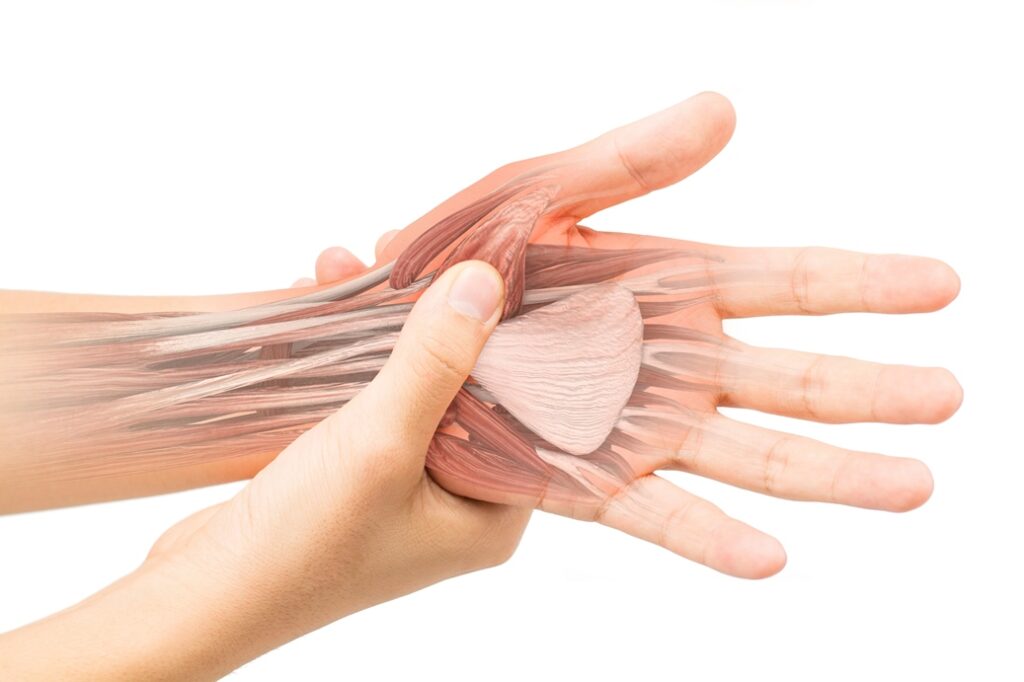
Once a damaged nerve is repaired, the outer sheath generally heals within three to six weeks. The nerve fibres inside only start regrowing after that, at roughly 1mm a day.
That speed sounds slow because it is. A nerve injured near the wrist has a short distance to regrow before it reaches the fingertips. A nerve injured higher up the arm has much further to travel, so the same injury can take months longer to show any result depending purely on where along the nerve it happened.
How the nerve was damaged matters just as much as where. A clean, sharp laceration that is repaired quickly tends to recover more predictably than a crush or stretch injury, where the internal structure of the nerve can be disrupted over a longer segment than is visible on the surface.
Individual factors add further variation on top of that. Age, how much scar tissue forms around the repair, and whether the hand is protected and exercised correctly during recovery can all move the same injury toward a better or worse outcome than the average case would suggest.
How Long Recovery Can Genuinely Take
In the first three months after a nerve repair, numbness and reduced movement in the hand are normal and expected. This isn’t yet evidence of a poor outcome, it’s simply how long the nerve needs before regrowth can be detected clinically.
From around three months, feeling and movement typically start to return, often as tingling or a burning sensation as the nerve reconnects. Muscles that come back online may initially be weak, and some muscle wasting can be visible by this stage.
The overall picture can keep changing for a long time after that. Full recovery, where it happens, commonly takes two to five years, and a meaningful proportion of nerve injuries never recover completely, regardless of how well the initial repair was performed.
Why Settling Too Early Risks Getting the Value Wrong
An early prognosis is, by necessity, based on what typically happens to a nerve injury of that type and severity. It’s a reasonable starting estimate, not a guarantee about this particular patient.
If the claimant’s actual recovery turns out slower, or less complete, than the early average suggested, a claim settled on that early prognosis undervalues what has actually happened. The same risk works the other way. A cautious early prognosis followed by a better-than-expected recovery can leave a defendant overpaying for a disability the claimant didn’t end up with.
This is really a specific version of a wider problem in personal injury litigation, one explored from a different angle in the piece on gaps in the medical evidence that delay a claim. Valuing a claim fairly depends on the evidence actually being complete enough to value, and with a recovering nerve, it often simply isn’t yet.
The Legal Tools for Handling an Uncertain Prognosis

Waiting for complete certainty isn’t always realistic, and it isn’t what the law requires. Two established mechanisms exist precisely to bridge the gap between a claimant’s immediate needs and a prognosis that hasn’t yet settled.
Interim Payments, Money Now Without Finalising the Claim
Where liability is admitted, or the court is satisfied the claimant would recover substantial damages at trial, an interim payment can be ordered on account of the final settlement. This is often used to fund ongoing treatment, adapted equipment, or lost earnings while the nerve injury is still recovering.
An interim payment doesn’t fix the claim’s final value. It simply releases money the claimant is already very likely to be owed, without forcing a premature decision on how much the whole claim is worth.
Provisional Damages, Settling Now While Keeping a Defined Risk Open
Under CPR Part 41, made under section 32A of the Senior Courts Act 1981, a court can assess damages on the assumption that a specific future deterioration won’t happen, while allowing the claimant to return and apply for more if it does.
For a nerve injury, this could cover a defined risk such as the later development of chronic neuropathic pain, which doesn’t always declare itself within the usual recovery window. The order has to name the specific condition and set a time limit for any future application, it can’t simply leave the claim open generally.
This route suits a case where the main recovery picture is reasonably clear, but one specific, serious complication remains a real possibility. It isn’t a substitute for waiting when the whole recovery trajectory is still genuinely unknown.
Once Recovery Has Plateaued, How the Claim Is Valued
The Judicial College Guidelines value nerve damage to the hand and arm according to how permanent and disabling the resulting weakness, numbness or pain turns out to be, not according to the mechanism of injury. Our piece on the medicolegal challenges of upper limb nerve injuries sets out how that severity is actually assessed and classified.
A case with full or near-full recovery sits toward the lower end of its bracket. A confirmed, permanent and significant deficit, particularly affecting a dominant hand or the ability to work, moves the case toward the top of the range or into a higher bracket entirely.
Where the injury also involves affected muscles or tendons, the valuation draws on the same classification tools covered in the article on nerve, muscle and tendon injury assessment, since the final functional loss, not just the nerve grade on its own, is what the guidelines are actually valuing.
What an Expert Witness Looks at When Advising on Timing
An expert isn’t deciding the legal timing of a claim, that’s for the solicitors and the court. What the expert is asked for is a clinical opinion on whether recovery has actually plateaued, or whether meaningful further change is still likely.
That opinion is built from serial examination rather than a single snapshot, comparing sensory testing and grip strength across more than one visit to see whether the trajectory of improvement is still moving or has levelled off. Nerve conduction studies and EMG add objective detail, though both are more reliable from several weeks after injury onward, an early test can still miss how the picture will develop.
Clinical guidance from bodies such as the British Society for Surgery of the Hand is often referenced to support what a reasonable recovery trajectory and timeframe actually look like for a given type of nerve injury, so the opinion is tied to recognised clinical practice rather than one surgeon’s personal impression.
Settling Early, Interim Payment or Provisional Damages, at a Glance
| Approach | What It Does | Main Risk |
|---|---|---|
| Settling early, on the initial prognosis | Finalises the whole claim straight away | Can undervalue or overvalue the claim if recovery differs from the average |
| Interim payment | Releases funds on account, claim stays open | Only available once liability or quantum is sufficiently clear |
| Provisional damages order | Settles now, but allows a return to court for one named future risk | Only covers the specific condition and timeframe named in the order |
| Waiting for recovery to plateau | Final settlement reflects the actual outcome | Delays compensation and can test the claimant’s patience and finances |
Frequently Asked Questions
How long do nerve recovery timelines usually take after a hand injury?
Early signs of recovery typically start around three months after a nerve repair. Full recovery, when it happens, commonly takes two to five years, and some nerve injuries never recover completely.
Why can settling a nerve injury claim early be a problem?
An early settlement is based on an average prognosis, not on how this specific injury will actually turn out. If recovery turns out slower, less complete or better than expected, an early settlement can undervalue or overvalue the claim.
What’s the difference between an interim payment and settling the claim?
An interim payment releases money toward the final settlement without fixing the claim’s total value. The claim itself stays open until the final prognosis is clear.
What is a provisional damages order?
It’s a court order that settles a claim on the basis that a named future deterioration won’t happen, while allowing the claimant to return and claim more if it does. It has to name the specific condition and a time limit for applying.
How does an expert witness decide if a nerve injury has plateaued?
By comparing examination findings, sensory testing and grip strength across more than one visit over time, rather than relying on a single assessment, supported by nerve conduction studies or EMG where appropriate.
Hand injury claims involving a recovering nerve call for an expert who can give a realistic, clinically grounded opinion on timing as well as severity. Prof. Sandip Hindocha provides independent reports for solicitors acting for either claimants or defendants in these cases. Instruct an expert witness to discuss a case.
Related reading
- The Medicolegal Challenges of Nerve Injuries in the Upper Limb
- The Medicolegal Aspects of Nerve, Muscle and Tendon Injury
- Outcomes Following Upper Limb Injuries and Their Medicolegal Implications
This article is for general information and does not constitute legal or medical advice. Every case depends on its own facts and clinical records, and should be assessed individually by a suitably qualified expert.