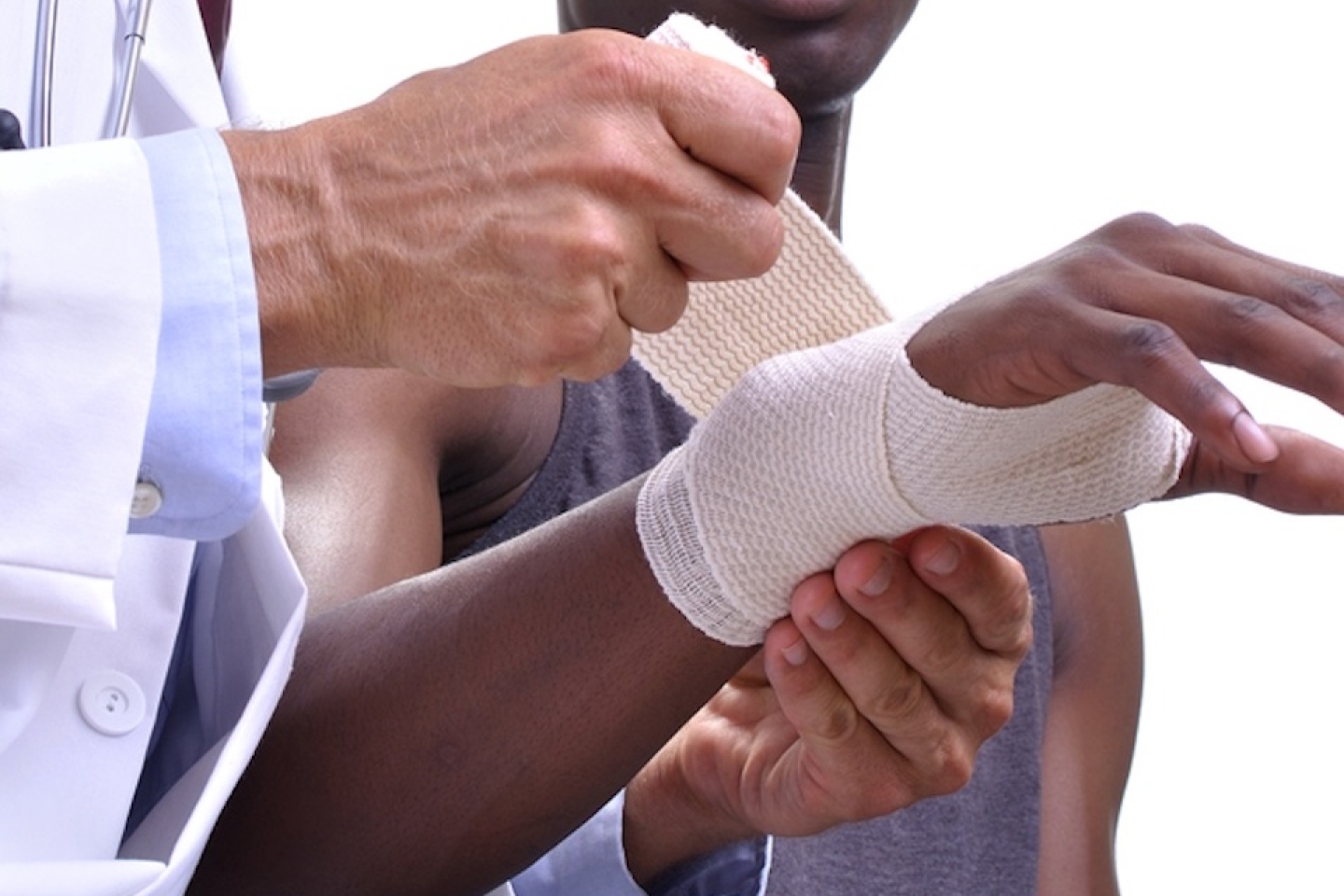
When a limb is severely injured, in a road traffic collision, a workplace crush injury, or a case where the blood supply is suddenly cut off, the question of limb salvage vs amputation is rarely settled by a single test result. It’s a judgement call, built from several pieces of clinical evidence weighed together, and it’s exactly that judgement that gets picked apart later if a claim is brought.
Prof. Sandip Hindocha, a Consultant Plastic Surgeon who prepares hand and upper limb expert witness reports and reviews complex trauma cases for solicitors and insurers, regularly has to reconstruct exactly this kind of decision, working out whether it matched what a reasonably competent surgeon would have done with the same information at the time.
In short: no scoring system, including the widely used Mangled Extremity Severity Score, reliably decides whether a limb should be salvaged or amputated. The decision rests on the combined picture of vascular and nerve injury, bone and soft tissue loss, contamination, and the patient’s own health and wishes. When it’s challenged in litigation, what matters is whether that judgement was reasonable given the information available at the time, not whether it turned out to be the ideal outcome with hindsight.
What Limb Salvage vs Amputation Actually Means
A “mangled extremity” is the term used when a limb has suffered severe injury to at least two of five structures in the same segment, the skin, muscle, nerve, bone and blood vessels. Limb salvage means attempting to preserve a functioning limb through vascular repair, bone fixation and soft tissue reconstruction, often over several operations.
Primary amputation means removing the limb early rather than pursuing that reconstruction. Neither option is automatically the safer or more conservative choice. A prolonged salvage attempt on a limb that was never going to recover useful function can expose a patient to a longer, higher-risk course of treatment for a worse eventual result than an earlier amputation would have given them.
The Clinical Factors That Actually Drive the Decision
In practice, the surgical team weighs several variables together rather than relying on any one of them in isolation.
Vascular Injury and Ischaemia Time
How long the limb has been without adequate blood supply, and whether that supply can be reliably restored, is usually the single biggest factor. Warm ischaemia beyond around six hours significantly increases the risk of irreversible muscle death, though the exact tolerance varies between patients and tissue types.
Bone and Soft Tissue Loss
Extensive bone loss and stripped-away soft tissue coverage both raise the number of reconstructive procedures needed and lower the odds that the limb will end up more functional than a well-fitted prosthesis.
Nerve Injury and Loss of Sensation
An insensate limb was, for many years, treated as an almost automatic indication for amputation, on the assumption that a foot or hand that can’t feel the ground or an object isn’t functionally worth keeping. That assumption has since been directly tested and found wanting, which the LEAP study section below covers in more detail.
The Patient’s Own Health, Age and Wishes
Diabetes, smoking, peripheral vascular disease and older age all reduce the likelihood that a salvaged limb will heal well. A patient’s own occupation, mobility goals and tolerance for a long, uncertain reconstruction are also part of a properly conducted discussion, not an afterthought once the surgical decision has already been made.
Why Scoring Systems Like MESS Don’t Settle the Question
The Mangled Extremity Severity Score, or MESS, was developed in 1990 and remains the best known attempt to turn this decision into a number. It scores skeletal and soft tissue injury, limb ischaemia and its duration, shock, and patient age, with a total above seven historically flagged as favouring amputation.
Three other systems followed the same idea: the Predictive Salvage Index, the Limb Salvage Index, and NISSSA, each weighing a slightly different mix of vascular, nerve, bone and soft tissue factors against its own threshold.
A systematic review of these four scoring systems found that none of them reliably discriminates which limbs actually need amputation, and that amputation rates among patients scoring above the MESS threshold of seven ranged from 0% to 41% across different studies, an inconsistency wide enough that the review concluded no score should be used as the sole basis for the decision.
| MESS | Predictive Salvage Index | Limb Salvage Index | NISSSA | |
| What it weighs | Skeletal/soft tissue injury, limb ischaemia, shock, age | Warm ischaemia time, bone and muscle damage, vascular injury | Artery, nerve, bone, skin and muscle condition, warm ischaemia time | Nerve injury, ischaemia, soft tissue injury, skeletal injury, shock, age |
| Threshold linked to amputation | Above 7 | Above 8 | Above 6 | Above 11 |
What the LEAP Study Found About Long-Term Outcomes
The Lower Extremity Assessment Project, an NIH-funded study that followed 601 patients with severe lower limb trauma across eight American level one trauma centres, remains the most detailed evidence available on how salvage and amputation actually compare once the dust settles.
It found that none of the existing severity scores, MESS included, reliably predicted which limbs required amputation. It also directly tested the assumption that an insensate foot can’t be usefully saved, of 29 insensate limbs that were salvaged anyway, roughly 55% had regained normal sensation within two years, a result indistinguishable from limbs that had sensation from the start.
On overall function, the study found little to separate the two paths. At two years, patients’ Sickness Impact Profile scores, a validated measure of disability, were statistically indistinguishable between amputation and reconstruction, and return-to-work rates were similar in both groups, though the reconstruction group had a noticeably higher complication rate over that period.
By seven years, only around half of all patients, regardless of which treatment they’d had, had returned to work, half still reported severe disability, and fewer than a quarter were pain-free. What predicted a better outcome more strongly than the treatment path itself was the patient’s own self-efficacy, whether they’d developed depression, and their socioeconomic circumstances before the injury.
How the Decision Is Judged When It’s Litigated

Because no score is determinative, a negligence claim over a limb salvage vs amputation decision is never really about whether the “right” limb outcome was achieved. It’s about whether the decision-making process at the time was one a responsible body of similarly qualified surgeons would have reached, given the information actually available, not what looks obvious once the final result is known.
An expert reviewing the case looks closely at what was documented at the time, whether senior or multidisciplinary input was sought where it should have been, and whether the patient was properly involved in a decision that was theirs to help make wherever time allowed for that discussion.
Causation is frequently the harder question, even where a delay or a missed sign is admitted. A 2024 King’s Bench claim over an above-knee amputation, for instance, turned less on whether the original treatment had fallen short than on which of two competing complications had actually driven the amputation, a deep vein thrombosis linked to an admitted treatment failure, or a separate pain syndrome that may have arisen independently. That kind of dispute, over what actually caused the amputation rather than whether care was imperfect, sits at the centre of most claims in this area.
Common Grounds for a Negligence Claim Around This Decision
Several recurring failures come up in medical negligence claims involving a mangled limb, more often in the process than in the ultimate choice itself.
A delayed recognition of vascular compromise or compartment syndrome can turn a salvageable limb into one that no longer is, purely through lost time. Poor documentation of the reasoning behind the decision, particularly where it was made under pressure, makes it much harder to defend later regardless of whether the decision itself was sound.
Failing to escalate to a specialist or a multidisciplinary team when the case clearly warranted it, and continuing a salvage attempt on a limb with no realistic prospect of useful function, causing prolonged pain, repeated surgery or sepsis before amputation eventually happens anyway, are the other patterns that most often surface in cases arising from road traffic collisions and severe workplace trauma.
What a Medicolegal Expert Report on This Decision Needs to Address
A report on a limb salvage vs amputation case has to reconstruct the clinical picture as it stood at the time of the decision, not with the benefit of knowing how things turned out. That means working through the imaging, the observations charted at each stage, and the timeline of exactly when each finding was known.
It then sets out whether the documented reasoning matches what would be expected of a reasonably competent surgeon managing the same injury, and, where a breach is established, separates what the original injury would always have caused from what the alleged negligence added on top. That distinction is usually what the whole claim hinges on.
This is the same standard the report has to hold up to under CPR Part 35 if it’s challenged by the other side, every conclusion tied to a specific, timestamped piece of evidence rather than a general clinical impression formed after the fact.
Frequently Asked Questions
Does a MESS score above 7 mean a limb must be amputated? No. A score above seven has historically been associated with a higher chance of amputation, but studies have found amputation rates among these patients ranging from 0% to 41%, so it’s treated as one input alongside clinical judgement, not a rule.
Can a limb recover feeling even if it had no sensation at the time of injury? Yes, in some cases. Research following salvaged limbs that had no sensation at the time found roughly half regained normal sensation within two years, which is why absent sensation alone is no longer treated as an automatic reason to amputate.
Do people who keep their limb end up with a better quality of life than those who have an amputation? Not reliably. Long-term studies have found broadly similar disability and return-to-work outcomes between the two groups, with a patient’s own psychological resilience and circumstances mattering more to the eventual outcome than which treatment path they took.
What makes a limb salvage vs amputation decision negligent, rather than just an unfortunate outcome? It usually comes down to whether the decision-making process, not the result, fell below what a responsible body of similarly qualified surgeons would have done with the same information at the time, for instance a documented failure to recognise vascular compromise promptly or to escalate the case appropriately.
Does this decision only apply to leg injuries, or does it come up in the arm and hand too? It applies to both. Most of the large research studies focus on the lower limb, but the same clinical reasoning, and the same medicolegal scrutiny, applies to severe upper limb and hand trauma.
Prof. Hindocha prepares CPR Part 35 compliant expert reports on limb salvage and amputation decisions for solicitors and insurers across England and Wales. Details of his hand and upper limb expert witness services and how to instruct him are on the instruction page.
Related reading
- Open Fractures and Negligence in Orthopaedic Trauma
- Outcomes Following Upper Limb Injuries and Their Medicolegal Implications
- Contracture Scarring and Loss of Function
This article is general information about how limb salvage and amputation decisions are clinically made and later reviewed, and is not a substitute for legal or medical advice on a specific case.