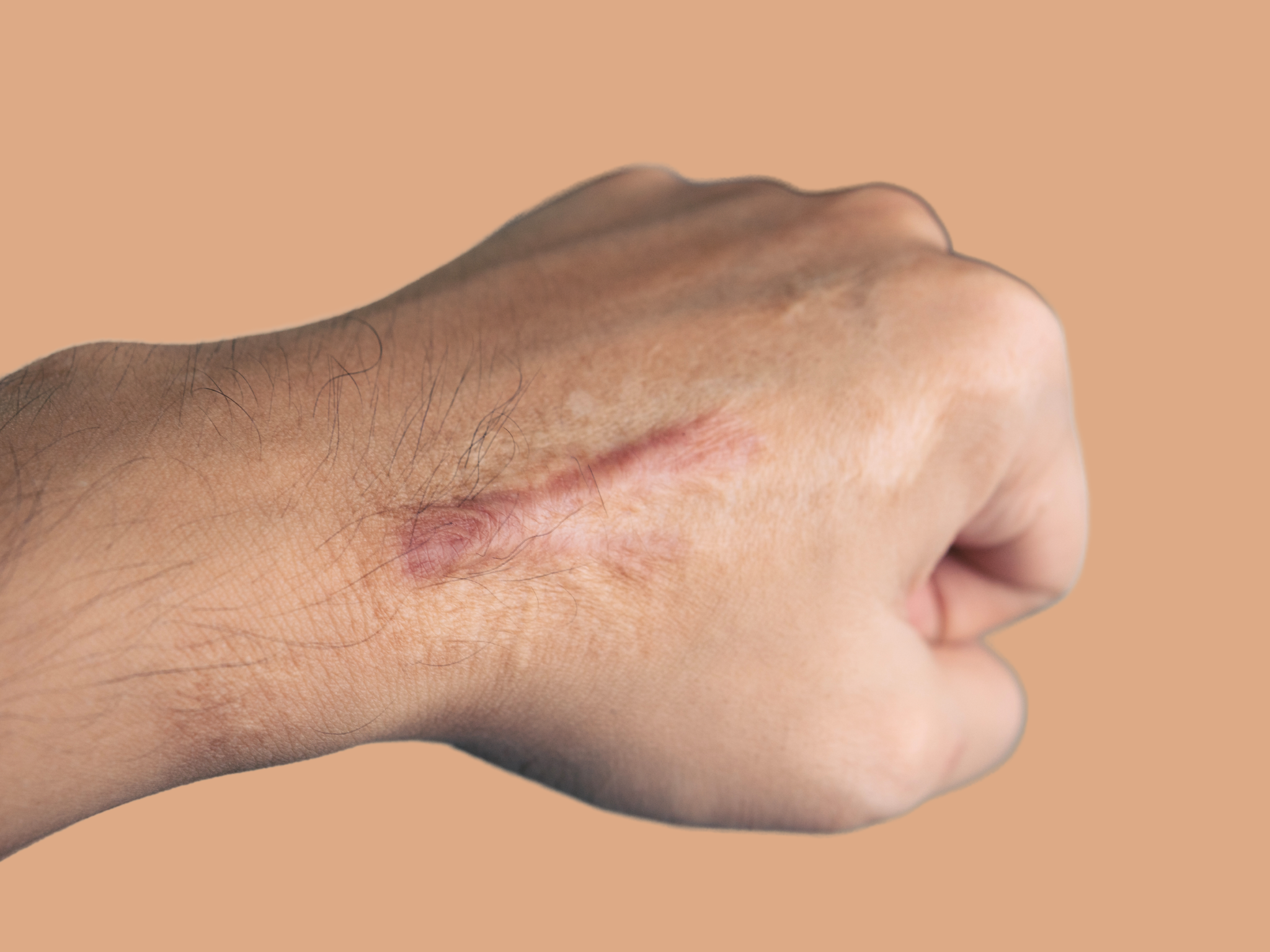
A nerve injury in the arm, wrist or hand rarely behaves the way a fracture does. Two patients with what looks like the same injury on the day it happens can end up in very different places, one back to normal within weeks, the other left with permanent weakness or numbness, and the difference is often not obvious until months later. That uncertainty is exactly what makes these cases hard to build a medicolegal report around.
Prof. Sandip Hindocha, a Consultant Plastic Surgeon who prepares hand and upper limb expert witness reports for solicitors and insurers, sees this play out in most nerve injury instructions, whether the dispute concerns a missed diagnosis, a delayed repair, or what the patient was told before surgery.
In short: nerve injuries are harder to assess than most upper limb injuries because their true severity often can’t be confirmed until weeks after the event, the right treatment depends heavily on exactly how the nerve was damaged, and negligence turns on whether reasonable care was taken at each decision point along the way, not simply on whether the eventual outcome was poor.
Why Nerve Injuries Are Different From Other Upper Limb Injuries

A fracture shows up on an X-ray within minutes of the scan being taken. A nerve injury doesn’t offer that certainty. The same numb finger or weak wrist can mean a mild, fully recoverable conduction block or a complete division that will never recover without surgery, and clinical examination alone often can’t tell the two apart in the first few weeks.
That diagnostic uncertainty is not a minor technicality. It’s the reason nerve injury claims tend to turn on a small number of specific decisions, whether the injury was properly classified, whether testing happened at the right time, and whether treatment followed what a reasonably competent clinician would have done in the same position.
The Common Ways Upper Limb Nerve Injuries Happen
Nerve injuries in the arm and hand arise in a few recurring patterns, and the pattern usually determines how the case should have been managed, which is often where a negligence argument starts.
Fracture-Associated Nerve Palsy
Certain fractures are well known to injure specific nerves. A humeral shaft fracture can injure the radial nerve as it winds around the bone, an elbow dislocation can stretch the ulnar nerve, and a distal radius fracture can affect the median nerve at the wrist.
Most of these palsies are present from the moment of injury rather than caused by later treatment, but how they’re then monitored and, if necessary, explored is squarely a clinical decision that can be judged against an accepted standard.
Iatrogenic Nerve Injury During Surgery
A nerve can also be damaged during treatment itself, a misplaced screw or wire during fracture fixation, a retractor left in the wrong position, or a nerve caught during a carpal or cubital tunnel release. This is usually called a secondary or iatrogenic palsy.
Because the surgical team already knows exactly when and where the injury most likely occurred, these cases often carry a stronger argument for early exploration, and a longer unexplained delay is harder to justify.
Injection, Anaesthesia and Compression Injuries
Nerves can also be injured by a poorly placed injection or regional nerve block, or compressed by a cast or splint applied too tightly, a tourniquet left inflated too long, or prolonged pressure during a lengthy operation under general anaesthetic.
These injuries are often preventable with attention to technique and monitoring, which is why they tend to attract particular scrutiny once a claim is brought.
How Nerve Injuries Are Classified and Why the Grade Matters

Clinicians grade nerve injury severity using the Seddon and Sunderland classifications, which range from a mild, temporary conduction block through to complete division of the nerve. Our article on outcomes following upper limb injuries sets out both systems in full.
What matters medicolegally is that the grade isn’t usually obvious on the day of injury. A nerve that looks intact can still be badly damaged internally, and a nerve that looks severely injured can sometimes recover well. This is precisely why the timing of assessment, not just the assessment itself, becomes a central issue in these claims.
Why Early Testing Can Give a False Picture
Nerve conduction studies and electromyography (EMG) are the main tools used to confirm how badly a nerve is damaged, but they only work reliably at certain points after the injury.
Testing within the first two weeks can help localise where an injury is, but it can’t yet show how severe it is. EMG generally needs at least four weeks, and often closer to six, before the changes that confirm denervation become detectable, since it takes that long for the affected muscle fibres to show it.
A clinician who tests too early and reports a falsely reassuring result, or who never arranges the test at all, can leave a genuinely severe injury undiagnosed for months. A second study around two to three months later is often what actually confirms whether recovery is under way.
The Window for Surgical Exploration and Repair
How quickly a nerve should be explored or repaired depends heavily on how it was injured, and getting this wrong is one of the more common bases for a negligence claim.
| Typical Approach | Typical Timing | |
| Clean, sharp laceration | Explore the wound and repair the nerve directly if possible | Ideally within about 72 hours, sometimes called the golden period |
| Closed fracture-associated (primary) palsy | Clinical observation, EMG or nerve conduction studies if no early improvement | Reviewed around three to four months, explored if no recovery by roughly six months |
| Iatrogenic (secondary) palsy after surgery | Early surgical exploration is often recommended to find and correct a treatable cause | Within days to a few weeks of the palsy being identified |
| Progressive or worsening palsy after a closed injury | Urgent exploration, since a worsening deficit points to an ongoing cause rather than a settled injury | As soon as reasonably possible |
These are general clinical patterns rather than fixed rules, and research into radial nerve palsy after humeral shaft fracture shows genuine debate within orthopaedic and plastic surgery literature over exactly when early exploration is justified. A medicolegal report has to engage with that debate rather than apply a single rule mechanically.
When a Nerve Injury Becomes a Negligence Claim
Not every nerve injury is negligent. Some occur despite entirely appropriate care, since nerves sit close to bone, joints and surgical fields and can be injured even when every reasonable precaution has been taken.
A medical negligence claim requires showing that a reasonably competent clinician in that position would not have acted the same way, the test set out in Bolam and refined since. Recurring examples include a nerve injury not consented for, a closed palsy left completely unmonitored, a wound not explored despite an obvious risk of nerve injury, or an EMG never arranged at all.
Consent and the Duty to Warn About Nerve Injury Risk

Since Montgomery v Lanarkshire Health Board, a patient must be told about any risk that a reasonable person in their position would want to know about, or that the particular patient would attach significance to, not just the risks a clinician thinks are worth mentioning.
For procedures with a recognised nerve injury risk, carpal tunnel release, cubital tunnel decompression, or fixation of a fracture near a major nerve, that means the risk of nerve damage, and what it could mean for sensation or hand function, ordinarily needs to be discussed and documented before the patient consents.
Proving Causation in a Nerve Injury Claim
Establishing that care fell below a reasonable standard is only half the task. The claimant also has to show that the substandard care caused the harm, not just that both happened around the same time.
This is genuinely difficult with nerve injuries, since some degree of permanent deficit can remain even with textbook management. A report has to separate what the original injury would probably have caused on its own from what the alleged failure in care actually added, often by comparing the claimant’s documented recovery pattern against what would typically be expected for that grade of injury.
How Nerve Injury Cases Are Valued Under the Judicial College Guidelines
The Judicial College Guidelines value nerve damage to the arm, wrist and hand across several brackets, generally scaled by how permanent and disabling the resulting weakness, numbness or pain turns out to be, rather than by the mechanism of injury alone.
A case involving full or near-full recovery sits at the lower end of its bracket, while a confirmed, permanent, severe deficit, particularly one affecting a dominant hand or someone’s ability to work, moves the case toward the top of the range or into a more serious bracket. At the extreme end, where the limb itself may not be salvageable, the medicolegal question changes again and turns on how the decision between limb salvage and amputation was reached. For the current bracket values, always check the latest published edition of the guidelines directly, since a figure found online can already be an edition out of date.
What a Medicolegal Report on a Nerve Injury Needs to Cover

A thorough report examines the claimant, applies the Seddon or Sunderland classification where relevant, and reviews the timing and results of any EMG or nerve conduction studies against when they should reasonably have been carried out.
Where negligence is alleged, it also has to set out clearly what a reasonably competent clinician would have done differently, and separate the effect of that failure from the underlying injury itself. Clinical guidance from bodies such as the British Society for Surgery of the Hand is often referenced to support what reasonable management looks like.
Every conclusion needs to be tied back to a specific, documented finding rather than a general impression, which is what allows the report to withstand scrutiny under CPR Part 35 if the opposing side challenges it. Some claimants firms that handle nerve injury litigation, such as Kingsley Napley’s overview of nerve injury claims, illustrate just how wide the range of outcomes and case values can be, underlining why each case has to be assessed on its own facts rather than by rough comparison.
Frequently Asked Questions
What makes upper limb nerve injury claims more complex than other orthopaedic claims? The true severity of a nerve injury usually can’t be confirmed until several weeks after it happens, and the correct treatment depends on exactly how and when the nerve was damaged. That makes timing, not just the initial injury, central to whether the case involves negligence.
How soon should a nerve injury be investigated with EMG or nerve conduction studies? These tests are generally most reliable from around four to six weeks after the injury. Testing earlier can help locate the injury but often can’t confirm how severe it is, so an early negative result should never be treated as final.
Is every nerve injury during surgery evidence of negligence? No. Nerves run close to bone, joints and surgical fields, and injury can occur despite entirely appropriate care. A claim depends on showing that a reasonably competent clinician in the same position would have acted differently, not simply that an injury occurred.
Does a delay in diagnosing a nerve injury always affect the final outcome? Not always, since some injuries recover well regardless of timing. But delay can matter a great deal for higher-grade injuries, where earlier surgical exploration or repair generally gives a better chance of recovery, so the effect of any delay has to be assessed case by case.
What is the difference between a primary and a secondary nerve palsy? A primary palsy is present from the moment of the original injury, such as a fracture. A secondary, or iatrogenic, palsy develops during or after treatment, for example following surgery, and is usually assessed differently because the likely cause and timing are often better defined.
Prof. Hindocha prepares CPR Part 35 compliant hand and upper limb expert reports for solicitors and insurers across England and Wales, drawing on validated nerve injury classification and clinical examination. Details of his hand and upper limb expert witness services and how to instruct him are on the instruction page.
Related reading
- The Medicolegal Aspects of Nerve, Muscle and Tendon Injury
- How Nerve Injuries in Children Are Assessed and Managed
- Outcomes Following Upper Limb Injuries and Their Medicolegal Implications
This article is general information about the medicolegal assessment of upper limb nerve injuries and is not a substitute for legal or medical advice on a specific case.