Flap reconstruction comes up in a wide range of claims, from traumatic limb injuries to breast reconstruction after cancer surgery, and it is often described in medical records and expert reports without anyone pausing to explain what it actually involves. Prof. Sandip Hindocha draws on his experience as a plastic surgeon and independent expert witness to set out what flap reconstruction is, the main types, and where it tends to come under scrutiny in a negligence or personal injury claim.
In short: a flap is living tissue, skin, fat, muscle or a combination, that is moved from one part of the body to another while keeping its own blood supply. It can be left attached by a stalk (a pedicled flap) or fully detached and reconnected under a microscope at the new site (a free flap). Flaps are chosen by tissue type and travel distance to match the defect being repaired, and the main things that go wrong, flap failure and donor site problems, both have a reasonably well understood pattern that matters when a claim is being assessed.
What a Flap Actually Is
A flap is tissue that is moved to a wound or defect along with its own blood vessels, as Johns Hopkins Medicine’s overview of flap surgery sets out. Because it brings its own blood supply with it, a flap can be used to rebuild much larger or deeper defects than a skin graft, which has no blood supply of its own and depends entirely on growing new vessels from the wound bed underneath it.
That difference matters clinically. A graft can fail to take if the wound bed underneath it is not healthy enough to support it. A flap carries its own circulation, so it can be used over bone, hardware, repaired vessels or irradiated tissue where a graft would not survive.
Pedicled Flaps and Free Flaps, the Basic Divide
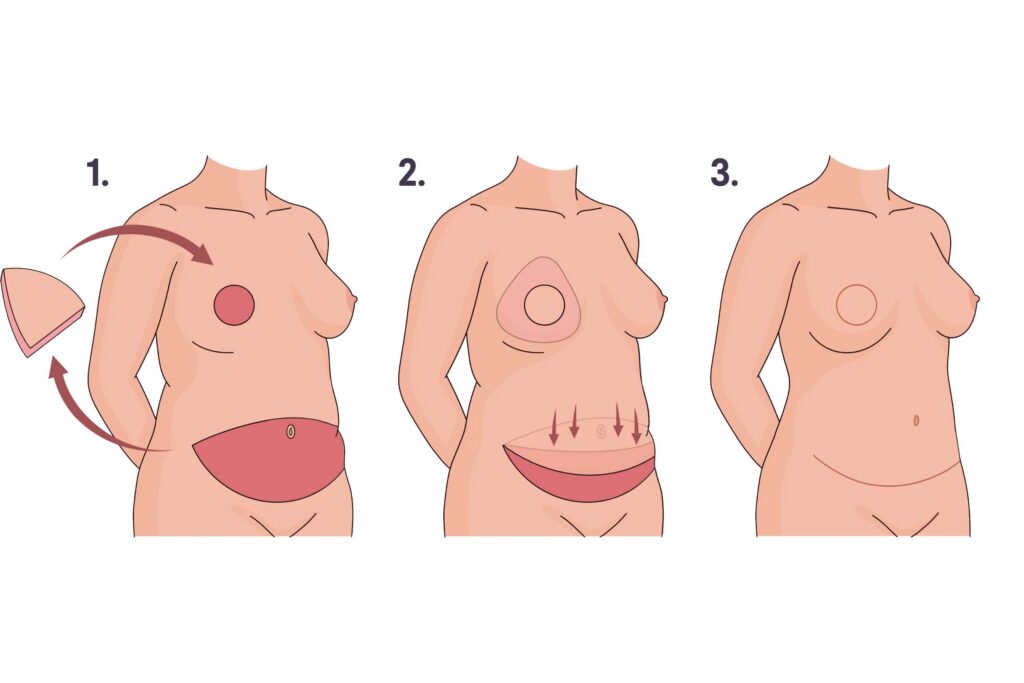
A pedicled flap stays attached to its original blood supply through a stalk of tissue, and is rotated, tunnelled or advanced into the defect while that stalk keeps it alive. A classic example is using tissue from the abdomen, still attached to its own vessels, to rebuild a breast.
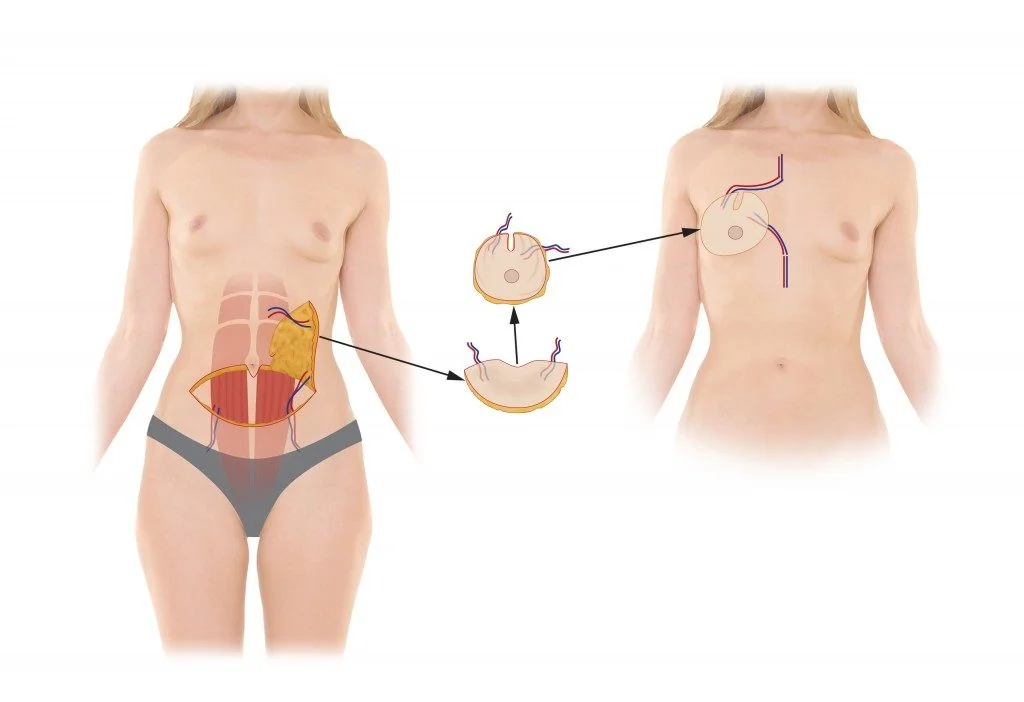
A free flap is fully detached from the donor site, moved to wherever it is needed, and has its artery and vein reconnected under an operating microscope, a technique called microsurgery. Free flaps allow tissue to travel much further around the body than a pedicled flap ever could, at the cost of a more demanding, more time-critical operation.
How Flaps Are Classified by Tissue Type
Flaps are also described by what they contain. A cutaneous flap is skin alone. A fasciocutaneous flap includes the layer of fascia beneath the skin. A muscle flap or myocutaneous flap includes muscle, sometimes with the overlying skin attached. A perforator flap takes skin and fat supplied by a single small vessel that perforates through or around the muscle, leaving the muscle itself in place.
Sparing the underlying muscle where possible, as a perforator flap does, generally leaves less functional loss at the donor site than taking the whole muscle with it, which is one of the reasons flap choice has become more refined over recent decades rather than defaulting to whichever flap is most familiar.
Common Named Flaps and What They Are Used For
Certain flaps recur often enough in records and reports that it helps to know what they involve.
| Flap | Tissue used | Typically used for |
| DIEP (deep inferior epigastric perforator) | Lower abdominal skin and fat, sparing the rectus muscle | Breast reconstruction after mastectomy |
| TRAM (transverse rectus abdominis muscle) | Abdominal skin, fat and some or all of the rectus muscle | Breast reconstruction, an older alternative to DIEP |
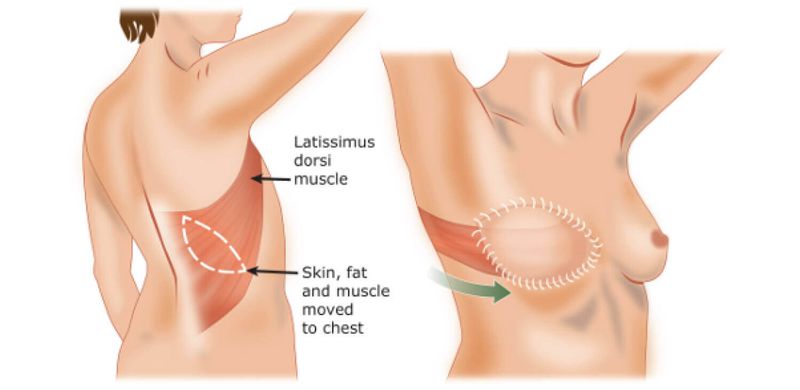
| Latissimus dorsi | Back muscle, usually with skin and fat, often paired with an implant | Breast reconstruction, trunk and shoulder defects |
| Radial forearm free flap | Thin forearm skin and fascia | Tongue, mouth and other intraoral reconstruction after head and neck cancer surgery |
| Fibula free flap | A segment of the fibula bone, with or without overlying skin | Jaw (mandible) reconstruction after cancer surgery |
| Anterolateral thigh (ALT) flap | Thigh skin, fat and fascia, sometimes with muscle | Limb trauma, head and neck defects, large soft tissue loss |
The same flap selection logic covered in more detail for traumatic limb injuries, matching the simplest technique that gives a good result against the scale of the defect, applies across these contexts, discussed further in the piece on the role of plastic surgery in limb reconstruction.
Why Flaps Fail, and How That Is Caught Early
A flap depends entirely on its blood supply, so the two things that threaten it are a blocked artery, which starves it of blood, and a blocked vein, which lets blood in but stops it draining, known as venous congestion. The two look different at the bedside. An arterially compromised flap turns pale and cool, with no bleeding on a pinprick test. A venously congested flap turns dusky, dark purple or blue, feels warm, and bleeds dark blood freely when pricked.
Both are checked for on a fixed schedule in the days after surgery, colour, temperature, capillary refill and sometimes a Doppler signal, often hourly to begin with. The reason for that intensity is timing. A review of the evidence on managing a failing flap found that returning promptly to theatre gives revascularisation in up to 60 to 70 percent of cases and long-term flap survival around 95 percent, but salvage rates fall sharply once roughly five hours have passed, and a flap that fails after the patient has already been discharged is very rarely saveable at all.
That timing window is why delayed recognition of a failing flap, rather than the original choice of flap, is often the more significant question in a claim involving flap failure.
Donor Site Effects, the Trade-Off That Needs Consent
Taking tissue from one part of the body to rebuild another always leaves something behind at the donor site, a scar at minimum, and sometimes a functional cost. Taking the whole rectus muscle for a TRAM flap can weaken the abdominal wall and carries a real risk of hernia, which is part of why the muscle-sparing DIEP technique has become more widely used. A latissimus dorsi flap leaves a back donor site and some loss of shoulder strength. A fibula flap leaves a leg that has lost part of a bone it will never get back.
None of this is a reason to avoid flap reconstruction, which is often the only realistic way to rebuild a significant defect. It is a reason the donor site trade-off needs to be properly explained and consented to beforehand, in the same way covered more generally in the piece on informed consent failures in plastic surgery claims, rather than surfacing for the first time once the patient wakes up.
Where Flap Reconstruction Becomes Relevant in a Claim
Flap reconstruction tends to surface in a claim in one of a few recurring ways. Sometimes the question is whether the flap chosen was reasonable for the defect involved, rather than whichever technique the operating surgeon happened to favour. Sometimes it is whether a failing flap was recognised and returned to theatre quickly enough, given how steeply salvage rates fall with delay. Sometimes it is whether the donor site effects were properly explained in advance.
Where the flap was needed after a traumatic injury rather than planned cancer or reconstructive surgery, timing against the injury itself becomes relevant too, covered in the piece on reconstructive surgery after workplace machinery injuries and in the open fractures piece on negligence in orthopaedic trauma. None of these questions can be answered from the outcome alone. A flap can be chosen well, monitored well, and consented to properly, and still fail, because flaps do sometimes fail even when everything was done correctly. What matters is whether the standard of care matched what a reasonably competent plastic surgical team would have done at each stage.
Frequently Asked Questions
What is the difference between a flap and a skin graft?
A flap brings its own blood supply with it, so it can be much larger and used over bone, hardware or damaged tissue.
A skin graft has no blood supply of its own and depends on the wound bed underneath it to grow new vessels, so it only works where that wound bed is healthy.
Is flap reconstruction only used after cancer surgery?
No. Flap reconstruction is also used after trauma, for limb salvage, for pressure sores, for wounds in tissue damaged by radiotherapy, and in several other situations where there is not enough healthy local tissue to close a defect directly.
How long does flap reconstruction take to heal?
Initial healing and the period of intensive flap monitoring usually lasts the first one to two weeks after surgery, since that is when the flap is at greatest risk of failure.
Full recovery, including at the donor site, generally takes several weeks to a few months, and depends heavily on which flap was used and how large it was.
Can a flap fail after the patient has already gone home?
Yes, although it is uncommon, since most flap failures happen in the first few days after surgery while monitoring is at its most intensive.
A flap that fails after discharge is much harder to save, since the delay before it is noticed and acted on tends to be far longer than in hospital.
What should be explained before consenting to flap reconstruction?
The donor site effects specific to the flap being used, whether that is a hernia risk, a loss of muscle strength, or a permanent scar somewhere else on the body.
Also worth covering beforehand: the realistic chance of flap failure, what would happen if it did fail, and why that particular flap was chosen over any simpler alternative.
Getting the Right Expert Input
Assessing whether flap selection, monitoring or consent met a reasonable standard needs a plastic surgeon’s independent clinical judgement, applied to the specific records and timeline of the case rather than to the outcome in isolation. You can instruct an expert witness or find out more about Prof. Sandip Hindocha’s experience as a plastic surgery expert witness.
Related reading
- How the Decision Between Limb Salvage and Amputation Is Judged
- The Medicolegal Aspects of Nerve, Muscle and Tendon Injury
- Breast Implant Litigation, BIA-ALCL Claims and Reconstructive Surgery
This article is provided for general information and does not constitute legal or medical advice. Every case depends on its own facts, and anyone considering a claim involving flap reconstruction should seek advice from a solicitor and, where appropriate, an independent expert witness.