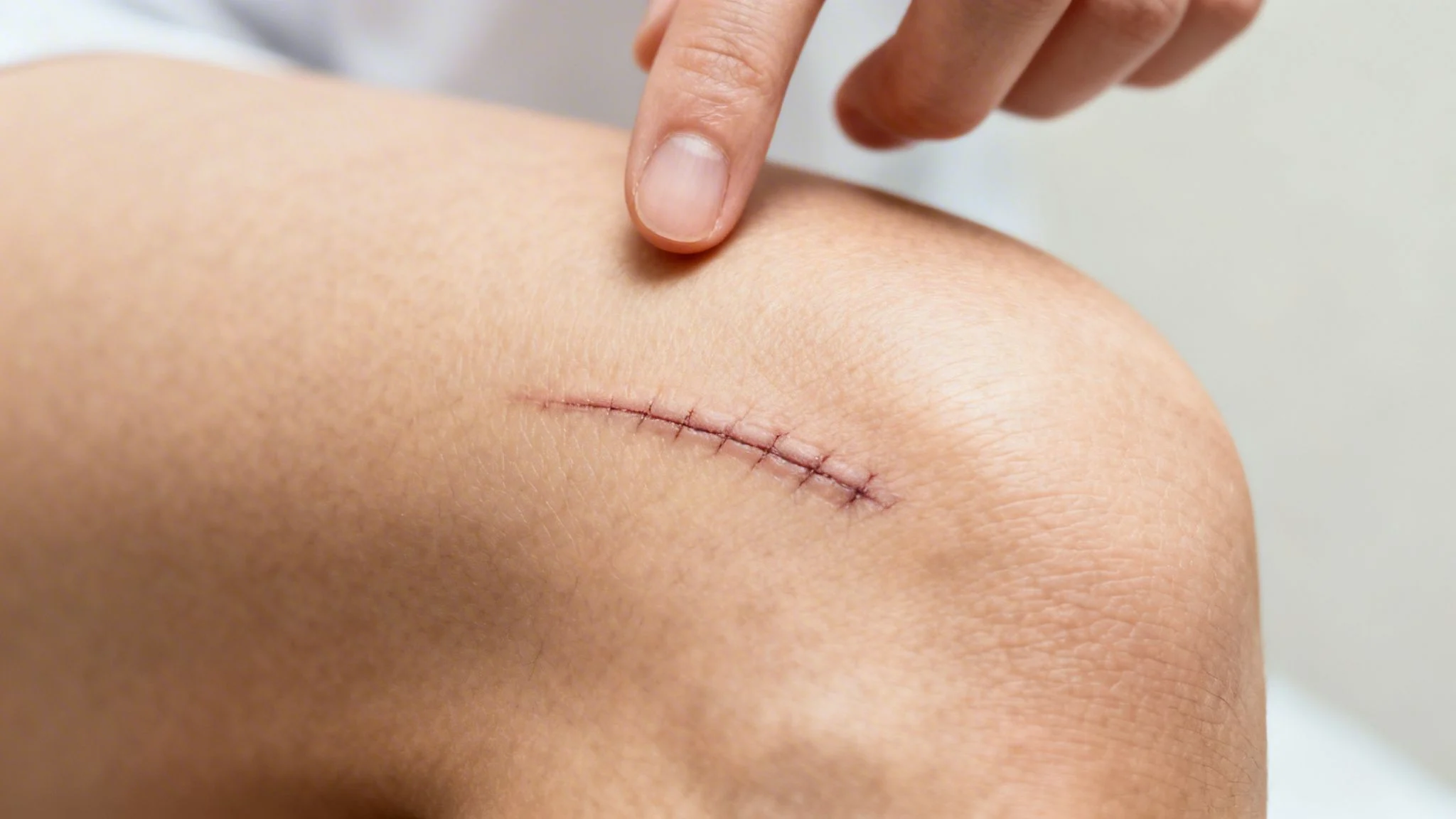
The Vancouver Scar Scale gives a scar a single score, from 0 to 13, based on four things a clinician can see and feel: how red or purple it looks, whether it’s lighter or darker than the surrounding skin, how flexible it is, and how raised it is above the surface. It was developed in 1990 for burns units and is now one of two scoring systems most commonly used in UK scarring and burns expert reports, the other being POSAS.
Prof. Sandip Hindocha, a Consultant Plastic Surgeon who prepares scarring and burns expert reports for solicitors and insurers, uses both scales during a clinical examination to turn what a scar looks like into a number a court can rely on, rather than a subjective description that’s harder to test.
In short: the Vancouver Scar Scale (VSS) scores vascularity, pigmentation, pliability and height, giving a total out of 13. POSAS, the Patient and Observer Scar Assessment Scale, scores six features from the clinician’s perspective and six from the patient’s, each out of 60. Neither score decides what a claim is worth by itself, but both give a scarring report the kind of measurable, repeatable evidence that holds up under CPR Part 35.
What the Vancouver Scar Scale Measures
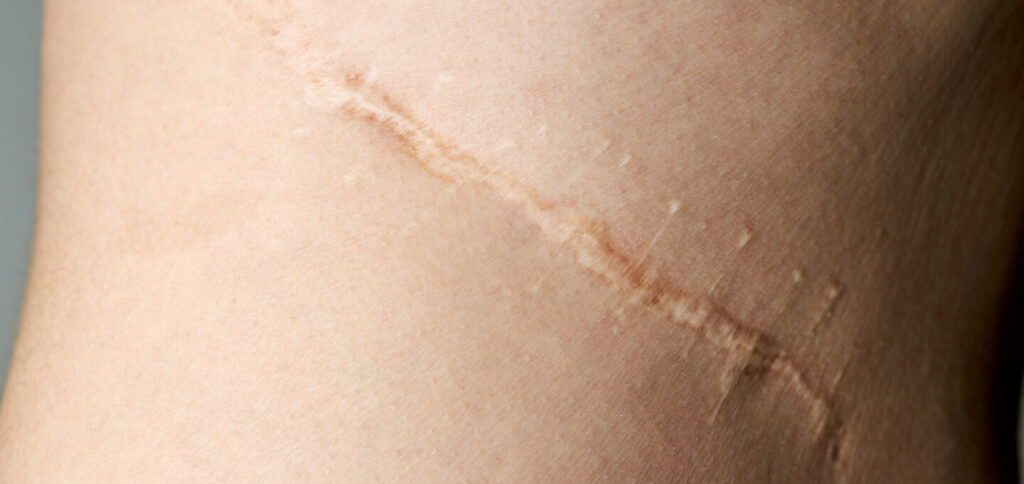
The VSS was developed by Sullivan and colleagues in 1990 to give burns clinicians a consistent way of tracking how a scar changes as it heals. It’s a clinical examination scale, meaning a trained assessor scores the scar directly rather than the patient reporting on it themselves.
The Four Components Scored
Vascularity looks at how red or purple the scar is compared with normal skin, scored from 0 (normal) to 3 (purple). Pigmentation compares the scar’s colour to the surrounding skin, scored 0 to 2.
Pliability, how easily the scar moves and stretches, is scored 0 to 5, with the highest score reserved for a scar that has contracted and restricted movement. Height measures how far the scar sits above the skin surface, from flat (0) to more than 5mm (3).
How the Total Score Is Calculated
The four component scores are added together to give a total between 0 and 13. A higher number means a more severe scar. A score of 0 represents skin that has returned to normal, while a score approaching 13 reflects a thick, tightly contracted, heavily discoloured scar.
What POSAS Measures
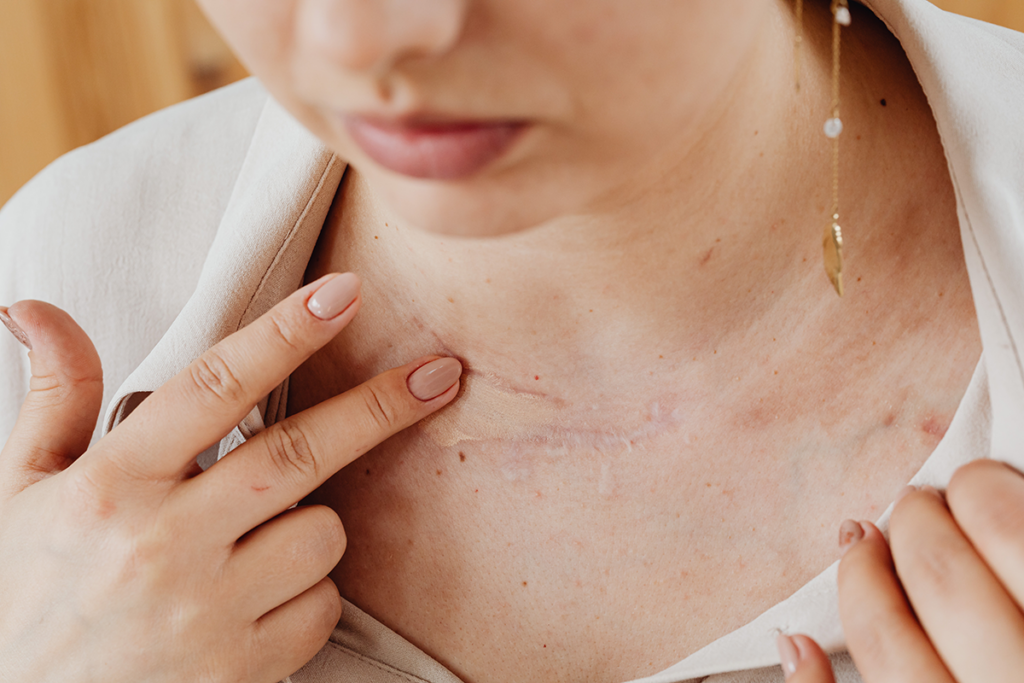
POSAS was developed in 2004 by Draaijers and colleagues to address a gap in the VSS: it didn’t ask the person living with the scar what it actually felt like. POSAS combines a clinician’s assessment with the patient’s own rating.
The Observer Scale
A clinician scores six features, vascularity, pigmentation, thickness, relief, pliability and surface area, each from 1 (normal skin) to 10 (worst imaginable scar), giving a total between 6 and 60.
The Patient Scale
The patient scores their own scar on pain, itch, colour, stiffness, thickness and irregularity, again from 1 to 10 each. Both the observer and the patient also give a separate overall opinion score, which isn’t added to the total but records their general impression of how the scar looks or feels.
Vancouver Scar Scale vs POSAS
The two tools measure overlapping ground but from different angles, and a scarring report will often reference both.
| Vancouver Scar Scale | POSAS | |
| Introduced | 1990 (Sullivan et al) | 2004 (Draaijers et al) |
| Who scores it | Clinician only | Clinician and patient |
| What it covers | Vascularity, pigmentation, pliability, height | Vascularity, pigmentation, thickness, relief, pliability, surface area, plus patient-reported pain, itch and stiffness |
| Score range | 0 to 13 | 6 to 60 on each of its two scales |
| Main strength | Quick, widely recognised, easy to repeat | Captures the patient’s own experience, generally considered more consistent between assessors |
Why These Scores Matter in a Scarring Compensation Claim
As explained in how scarring claims are valued in the UK, the Judicial College Guidelines assess scarring according to visibility, permanence and psychological impact rather than surface area alone. A VSS or POSAS score doesn’t replace that assessment, but it gives the solicitor and the court a documented, repeatable measurement to sit alongside it, rather than relying on a written description or a photograph alone. Where the scarring follows a facial injury, the score sits alongside the assessment of the injury itself, which is covered in facial trauma in a medicolegal context.
Where a scar restricts movement, the pliability component of both scales also helps separate the disability caused by the scarring itself from any disability caused by the underlying injury, which matters when a claim covers both.
How the Scales Are Used in an Expert Witness Report
In practice, an expert examines the scar in person, scores it against both scales, and photographs it for the record. The scores are reported alongside a written description and, where relevant, measured range of motion. This combination is what allows a report to survive scrutiny under CPR Part 35 and hold up if the claim is contested. Those rules govern how the report is written. Whether the person writing it is fit to hold themselves out as an expert at all is a separate question, covered in how expert witnesses are regulated in the UK.
Because both scales are validated and widely published, a scoring method used correctly is difficult for an opposing expert to challenge on methodology alone, even if they disagree with the conclusion drawn from it.
Where the Vancouver Scar Scale Falls Short
The VSS has a real limitation: it relies entirely on one assessor’s judgement, and studies have found only moderate agreement between different clinicians scoring the same scar. A 2024 systematic review of the scale’s use since 1990 found it remains one of the most common evaluation methods for scars despite this, largely because it’s quick and familiar to burns and plastic surgery clinicians.
It also says nothing about what the scar actually feels like to the person who has it. Pain and itching aren’t part of the score at all.
Why POSAS Is Often Used Alongside It
POSAS was built to close that gap. Its original validation study found it more consistent between different observers than the VSS, and because it asks the patient directly about pain, itch and stiffness, it captures something the VSS can’t. The scale’s official documentation sets out the full scoring criteria used by clinicians internationally.
Using both scales together gives a scarring report a clinician’s objective measurement and the claimant’s own account of the injury’s impact, which is usually what a properly evidenced claim needs.
Frequently Asked Questions
What is the Vancouver Scar Scale used for? It’s used to give a scar a standardised score based on how it looks and feels to a clinical examiner, most often to track healing after a burn or to provide objective evidence in a scarring compensation claim.
What is a good Vancouver Scar Scale score? A lower score is better. A score of 0 represents skin that looks and behaves like normal, unscarred skin.
There’s no fixed cut-off for what counts as a good score, since it depends on the scar’s location and the claim it’s supporting, but scores closer to 0 indicate a milder scar. Scars in children are also followed over a longer period, because a scar can change as a child grows, which is one reason paediatric claims are assessed differently.
What’s the difference between the Vancouver Scar Scale and POSAS? The Vancouver Scar Scale is scored by a clinician alone and covers four features, out of a possible 13. POSAS adds the patient’s own rating of pain, itch and stiffness alongside a wider clinician assessment, with each of its two scales running from 6 to 60.
Can I score my own scar using these scales? The observer components of both scales are designed to be scored by a trained clinician, so a self-assessment won’t carry the same weight as a professional one. POSAS does include a patient-completed section, but it’s meant to sit alongside, not replace, the clinical assessment.
Do I need a Vancouver Scar Scale score for a compensation claim? Not necessarily, but an independent expert assessment using validated scoring, of which the Vancouver Scar Scale and POSAS are the two most established, is usually what gives a scarring claim the objective evidence it needs to be properly valued.
Prof. Hindocha prepares CPR Part 35 compliant scarring and burns reports, using validated scoring alongside clinical examination, for solicitors and insurers across England and Wales. Details of his scarring and burns expert witness services and how to instruct him are on the instruction page. Examinations are held at the London clinics on Harley Street and at Fitzroy Square.
Related reading
- How Are Scarring Claims Valued in the UK?
- Keloid Scarring and Compensation
- Contracture Scarring and Loss of Function
- Publications by Prof. Sandip Hindocha
This article is general information about how scarring is clinically assessed and is not a substitute for legal or medical advice on a specific case.